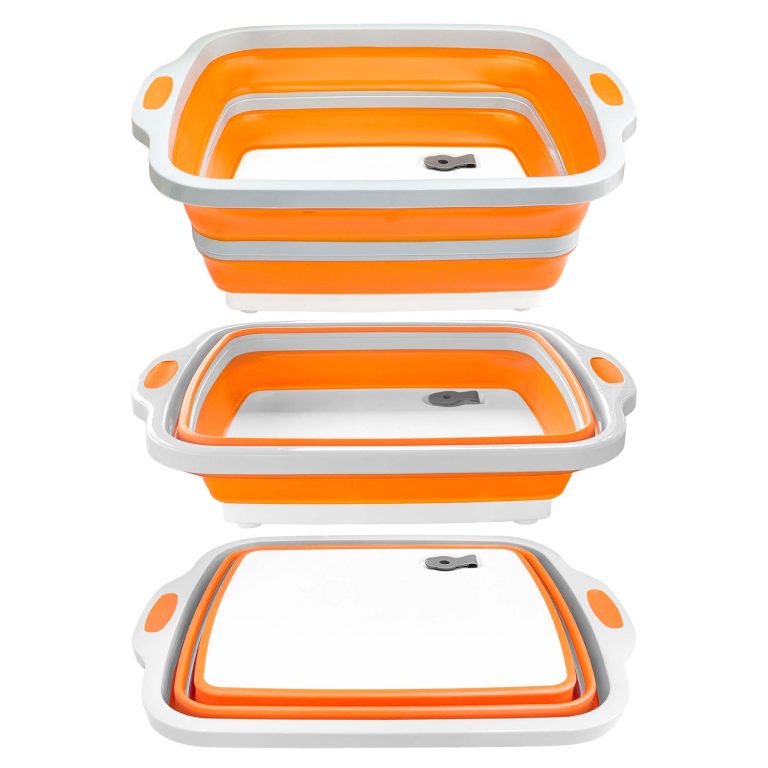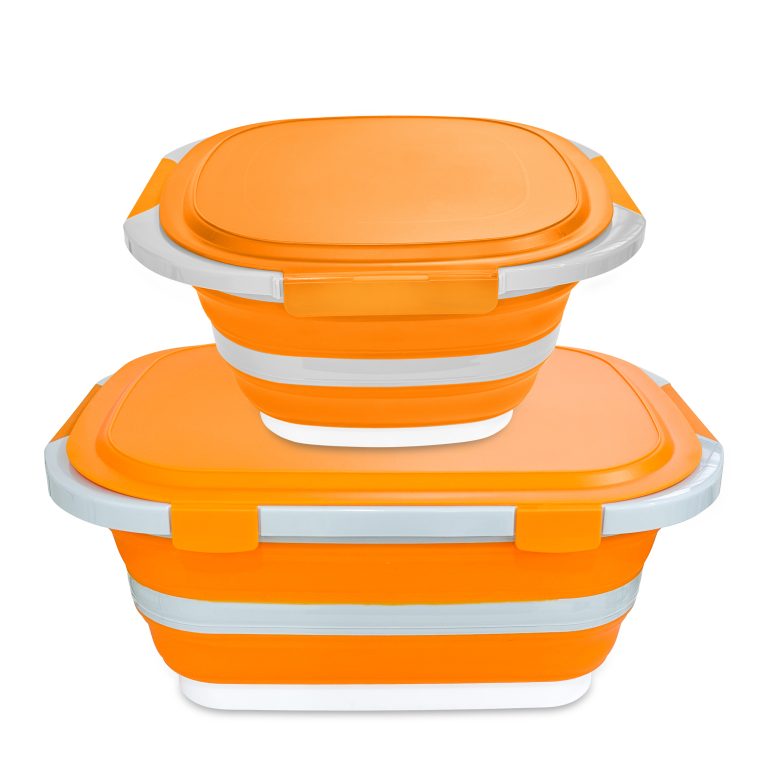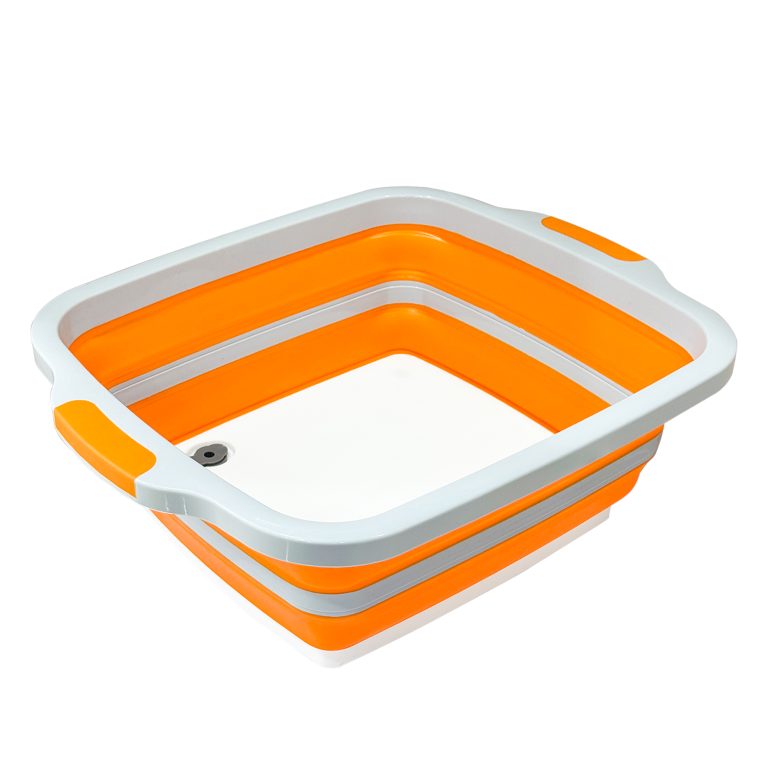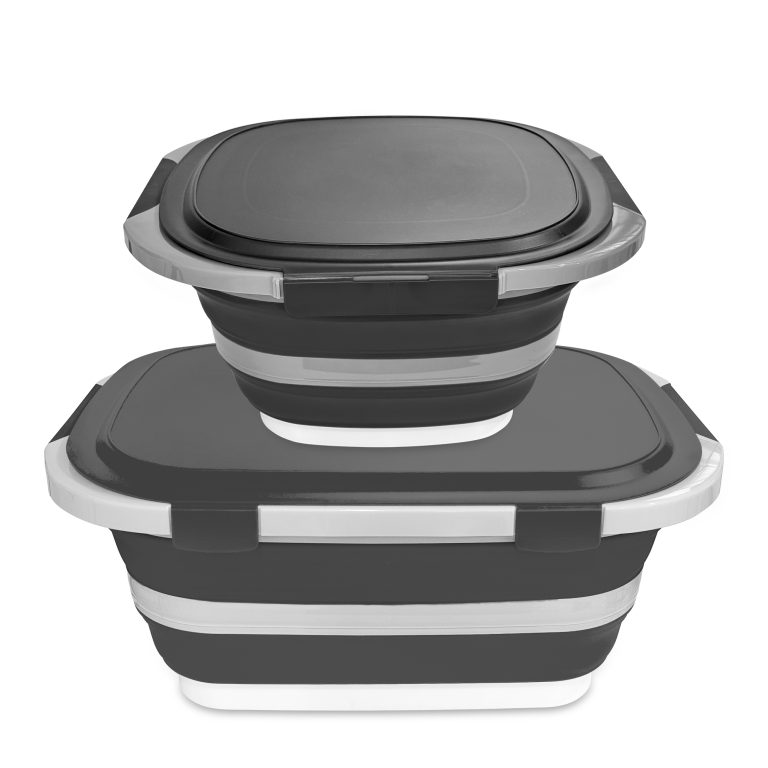
Silicone vs TPR is the comparison buyers ask about first, and the honest answer depends on which part of the basin you mean and how the customer will use it. Silicone gets the better reputation, and in some ways it earns it. On a folding basin, though, a silicone wall bonded badly into a PP body fails faster than a well-made TPR wall.
This comparison covers the six things that decide the answer: heat, feel, weight, cost, service life and food-contact paperwork.
Key takeaways
- Silicone handles higher heat; TPR handles bonding to rigid PP more easily.
- A badly bonded silicone wall fails before a good TPR wall, so construction beats material reputation.
- TPR is cheaper per unit, which is why it dominates volume retail.
- For dishwasher and freezer use, both are fine. For oven-adjacent heat, choose silicone.
What each material actually is
Silicone is a thermoset elastomer built on a silicon-oxygen backbone. It is made, not melted and remade, which is why it cannot simply be re-moulded like a plastic. It tolerates roughly -40 °C to 230 °C, does not support combustion easily and stays flexible when cold.
TPR is a thermoplastic elastomer, a physical blend of rubber-like and plastic-like blocks. It melts and re-moulds, tolerates roughly -20 °C to 120 °C, and bonds chemically well to polypropylene during co-moulding.
Side-by-side comparison
| Factor | Silicone | TPR |
| Heat range | about -40 to 230 °C | about -20 to 120 °C |
| Feel | Silky, slightly tacky | Firmer, dry |
| Weight for the same wall | Heavier | Lighter |
| Unit cost | Higher | Lower |
| Service life in normal kitchen use | Very long | Long |
| Bond to rigid PP body | Needs a primer or a mechanical lock | Bonds directly in the mould |
Read the last row twice. It is the reason most folding basins on the shelf are TPR even though silicone sounds better. On a flat silicone mat there is nothing to bond to. On a basin, the soft wall and the rigid body have to hold together under load, and a direct mould bond is harder to get wrong.
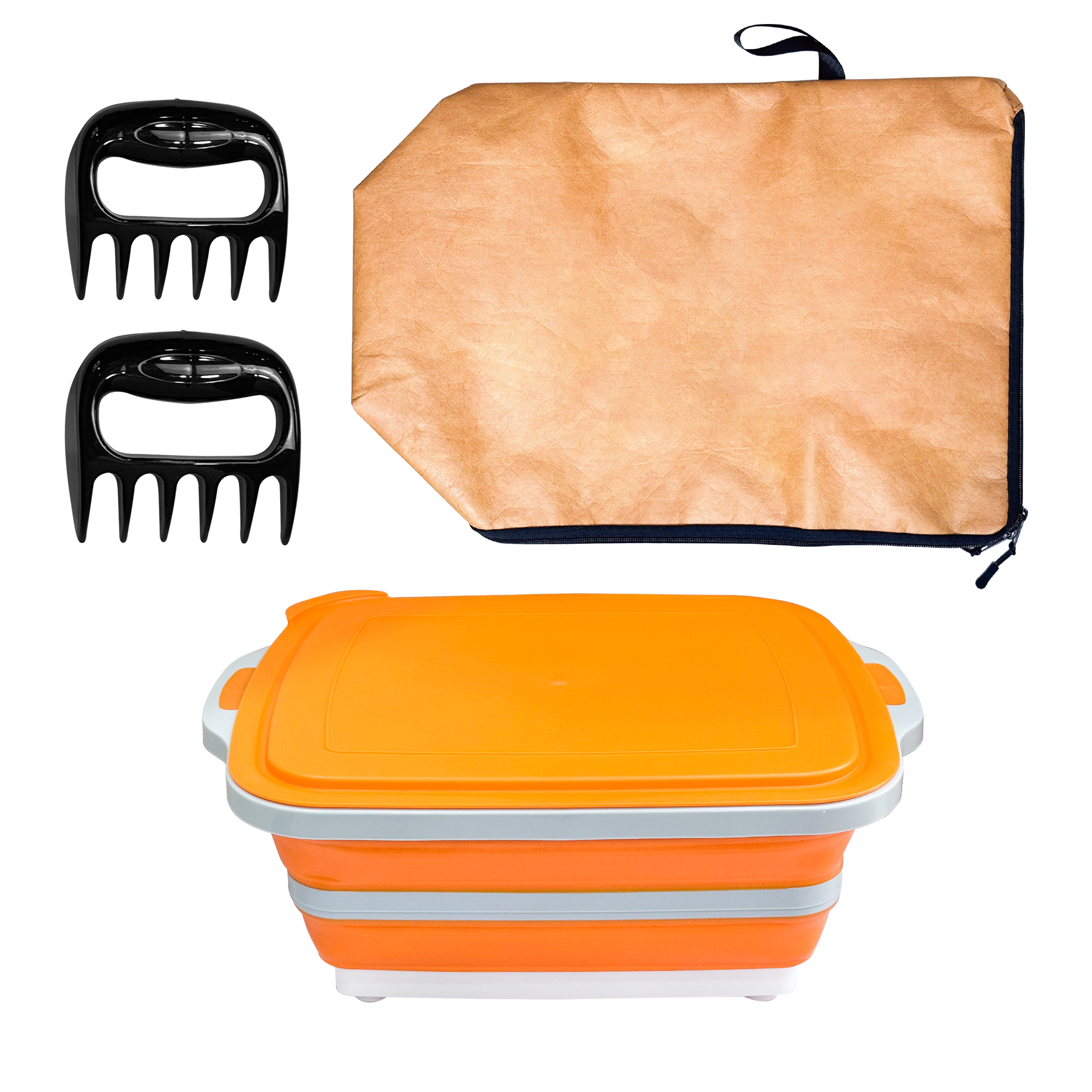
Why TPR became the volume choice
Two reasons, and neither is about quality. First, TPR runs on the same injection machines as the rigid body, so a factory can make the whole basin in one cell. Silicone usually means a separate compression or liquid-injection process, a second work area and a second quality routine.
Second, TPR takes pigment more predictably across a batch, which matters when a retailer wants four colours that match the shelf display.
Choosing by market
- Premium retail and gift channels. Silicone sells on the story. Expect a higher landed cost and a heavier unit, and be ready to explain why it costs more.
- Volume retail and discount channels. TPR. The cost per unit is lower, colour matching is easier and the failure rate is well understood.
- Camping and outdoor. Either works. Check the cold rating if the product is sold in northern markets.
- Food service and catering. Silicone, if the kitchen will pour very hot liquid or run the basin through a high-temperature dishwasher.
Frequently Asked Questions
Is silicone always better?
No. Silicone wins on heat resistance. On a folding basin, a weak bond between the silicone wall and the rigid body is a common failure, so construction quality matters more than the material name.
Can the two be mixed in one product?
Occasionally, mainly as a silicone seal inside a TPR or PP body. Mixing them as the folding wall is not practical, because they need different tooling temperatures.
Which one smells less when new?
Silicone usually has less odour out of the box. Any new basin should be washed once with warm water and mild soap before use.
How do I tell them apart in a sample room?
Silicone feels silkier and slightly tacky, and a flame test produces white ash. TPR feels drier, is easier to grip and burns with a black, sooty smoke. Ask for the material declaration instead of relying on the flame test.
Bottom line
Silicone is the better material when heat is the main risk. TPR is the better material when cost, colour consistency and a reliable bond to the rigid body matter more. On a folding basin, that second list is usually the one that decides the order.
Our folding basins use food-grade TPR bonded directly into a rigid PP body, rated -20 °C to 120 °C. Two examples are the 20L prep basin with locking lid and the 16L prep tub with airtight locking lid. Tell us your channel and we will suggest the version that fits it.