Breading chicken at home ends the same way every time: one hand caked in egg, crumbs across half the counter, and a plate of cutlets that are coated twice on one side and bare on the other. The fix is not skill. It is a breading bowl with a lid and a little more flour than you think you need.
Key takeaways
- Shaking coats evenly and uses less crumb than dipping. The lid has to lock, not just sit on top.
- A draining grid inside the bowl is what keeps the coating from turning into paste at the bottom.
- Four buckles beat two clips for travel and for a full bowl. Two clips are faster for small batches.
- Buy the size that fits a whole cutlet flat. Coating in a bowl that is too small is how the crust comes off.
Why shaking beats dipping
Dipping works, but it is slow and uneven: the first pieces get a thick coat and the last pieces get what is left in the dish. Shaking the food with the crumb instead spreads a thin, even layer and gets into the crevices of a drumstick or a fish fillet in about fifteen seconds.
The standard three-stage breading still applies — flour, then egg, then crumb. The bowl replaces the third stage only:
- Flour dries the surface so the egg has something to grip.
- Egg is the glue. Let the excess drip off, or the crumb slides off during frying.
- Crumb goes in the bowl with the lid shut. Four or five shakes, then open and check.
The three breading bowl types you will find
| Type | How it closes | Best for |
| Wide bowl with sealing clips | Two clips on the rim | Whole cutlets, fish fillets and legs, because the bowl is wide and shallow |
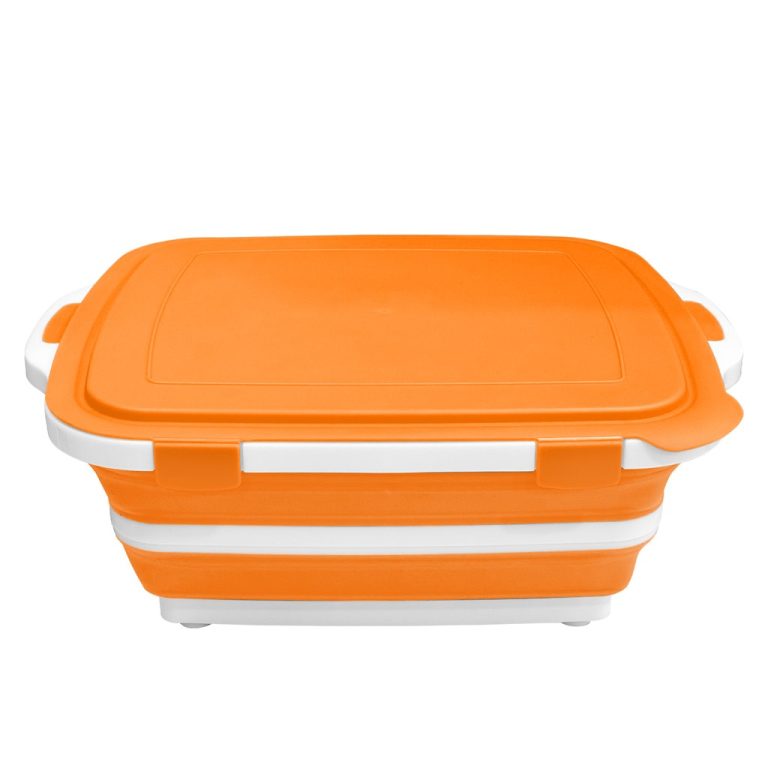
| Bowl with a buckle lid and draining grid | Four buckles, grid sits inside | Big batches, travel, and anything that would otherwise sit in wet crumb |
| Shaker with a sieve | Sieve screws or clips into the lid | Light dustings, shrimp, and seasoning chips or wings straight from the bag |
The choice comes down to shape. A wide, shallow bowl lets you lay a cutlet flat and shake it once. A deep bowl makes you dig for it, and every time the food is manipulated the coat comes off.
Breading chicken without the mess
- Pat the meat dry. Wet meat steams the coating off from underneath.
- Season the flour, not the crumb. Salt in the crumb makes it greasy fast.
- Egg wash in one bowl, drain the excess over the bowl, not over the crumb.
- Put the crumb in the breading bowl, add the food, lock the lid and shake four to five times.
- Lift the pieces out with one dry hand or tongs and set them on a draining grid, not on paper.
- Fry at 175 to 180 °C. Below that the coating soaks oil before it sets.
What to check before buying
| Feature | Why it matters |
| Lid closure | Four buckles hold through a vigorous shake. A lid that sits on top comes off with wet hands |
| Draining grid | Keeps the food above the loose crumb instead of sitting in it and clumping |
| Diameter | 26 cm coats a whole cutlet or a whole fish fillet flat. Smaller means more handling |
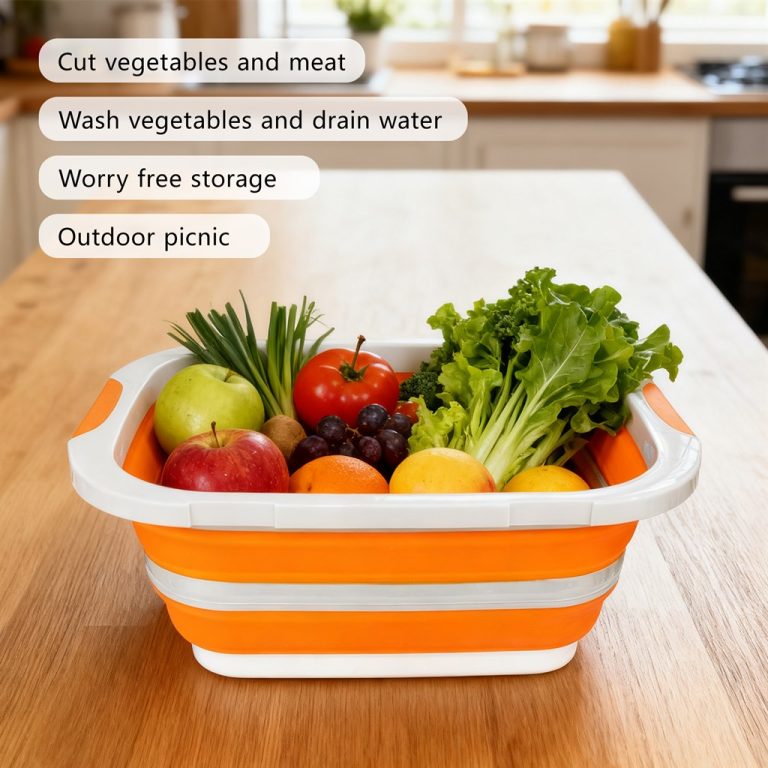
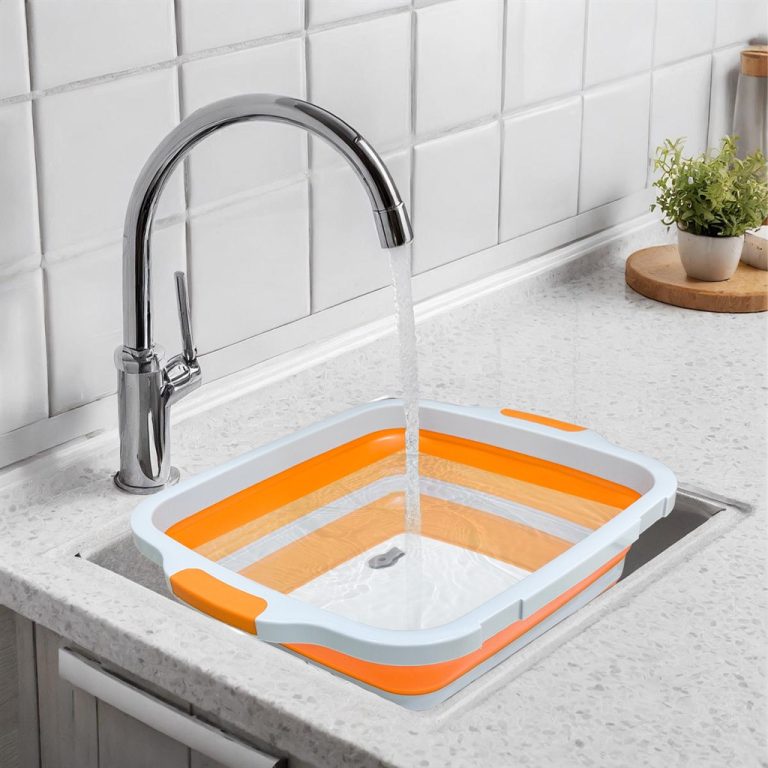
| Material | Food-grade PP and TPR fold flat and are dishwasher safe. Rigid plastic does not fold and takes drawer space |
| Depth when folded | A 5 to 7 cm folded height fits a drawer. Anything thicker ends up on the counter permanently |
| Lid as a tray | Some lids double as a serving tray, which saves one plate per batch |
Cleaning and storage
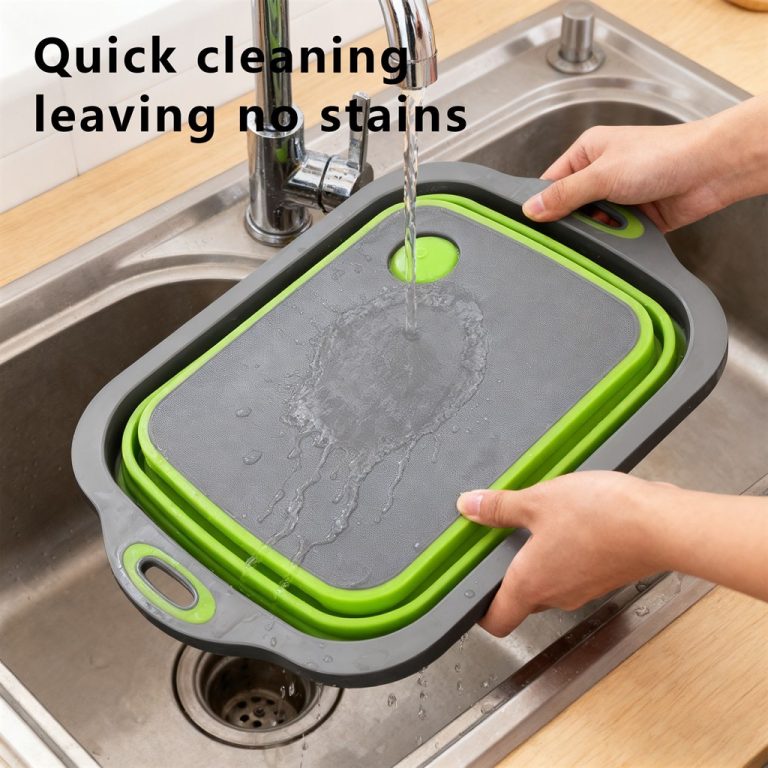
Crumb and egg dry hard, and a bowl left overnight needs soaking. Rinse under warm water while the oil is still heating and it takes ten seconds. The clips and the grid come off, so nothing gets trapped in a seam. Folded, the whole thing is about the thickness of a chopping board, which is why it tends to live next to the knives rather than in a cupboard.
If you cook in batches, note that the same fold-flat logic is what makes these bowls work on a boat or in a caravan kitchen — the same reason folding basins replaced fixed ones in those kitchens. See how the folding cutting board with colander and the 8, 16 and 30 litre basin sizes fit together, and if you are comparing materials, our silicone versus TPR comparison covers the difference.
For shops, garden centres and brands
Nicebuy produces breading bowls and shakers as standard production lines with MOQ 300 pieces per model, samples in 3 to 5 working days with the sample fee credited to the first production order, colour box or gift box with export carton as standard, and every model is made from food-contact grade materials. Bowl diameter, lid type, grid, colour and lid printing are all customisable, and the shaker version ships as a two-piece set most often ordered for Christmas retail.
Frequently Asked Questions
Can I bread chicken in a plastic bag instead?
For dry coatings, yes, and it is cheaper. A bag cannot hold a wet marinade, tips over, and tears on a bone. A bowl with a locking lid does both jobs and can be washed and reused for years.
How much crumb do I need for one chicken?
Roughly 150 g for a whole chicken cut into eight pieces. Shaking needs less than dipping because the crumb is not contaminated by the egg wash and can go back in the bag.
Why does my coating fall off in the pan?
Usually three reasons: the meat was still wet, the egg was not drained, or the oil was below 175 °C. Press the crumb on lightly with a dry hand before frying and it will stay put.
Is a breading bowl dishwasher safe?
Food-grade PP and TPR ones are. Put the grid and clips in the cutlery basket so they do not fly around, and dry the clips before storing so they keep their tension.
Bottom line
Pick the shape before the lid: wide enough for a cutlet to lie flat, with a grid, and a closure you trust with wet hands. The bowl with the leak-proof buckle lid and draining grid is the one for big batches, the 26 cm bowl with sealing clips is the quick one for a family dinner, and the shaker with the sieve is what you want for shrimp, wings and light dustings. All three fold flat, which is the reason they get used on a Tuesday instead of staying in the cupboard.