A grill basket set is a seasonal buy. It is ordered once, sold over one summer, and judged on how it holds up across that season. Almost every complaint traces back to three things: mesh open enough to drop small pieces onto the coals, a handle that gets too hot to lift, and a coating that starts lifting after a dozen trips through the sink.
Key takeaways
- The aperture decides the job. Roughly 8 to 10 mm holds sliced vegetables, shrimp and cubed potato; 15 mm and wider is for whole peppers, corn cobs and whole fish.
- Frame and mesh should be one welded piece. A mesh panel spot-welded to a stamped rim flexes open at the corners inside a single season.
- Coating is the main warranty risk. Bare stainless steel and enamelled steel survive; a thin non-stick layer is what generates most returns.
- Sets outsell singles, but only when the pieces nest. If a set does not pack flat, shelf depth is what kills the listing.
Grill basket mesh, frame and what actually holds the food
Mesh is described two ways and both matter: the wire diameter and the distance between wires. A 1.5 to 2 mm wire with a 10 mm opening is the general-purpose basket, holding a sliced onion while still letting smoke through. Open it to 15 mm and it becomes a fish and vegetable basket. Anything smaller than the opening falls through, and that is where the one-star reviews come from.
Wire thickness is what buyers notice on the label and it is the wrong thing to lead with. A heavy frame around thin mesh is a basket that looks solid and deforms the first time it is loaded. What holds a basket together is the join between the mesh panel and the rim. Seen from the side, a good join has a continuous weld line. A cheap one has four or five tacks and a visible gap at each corner, and that gap is what opens when the basket is full and hot.
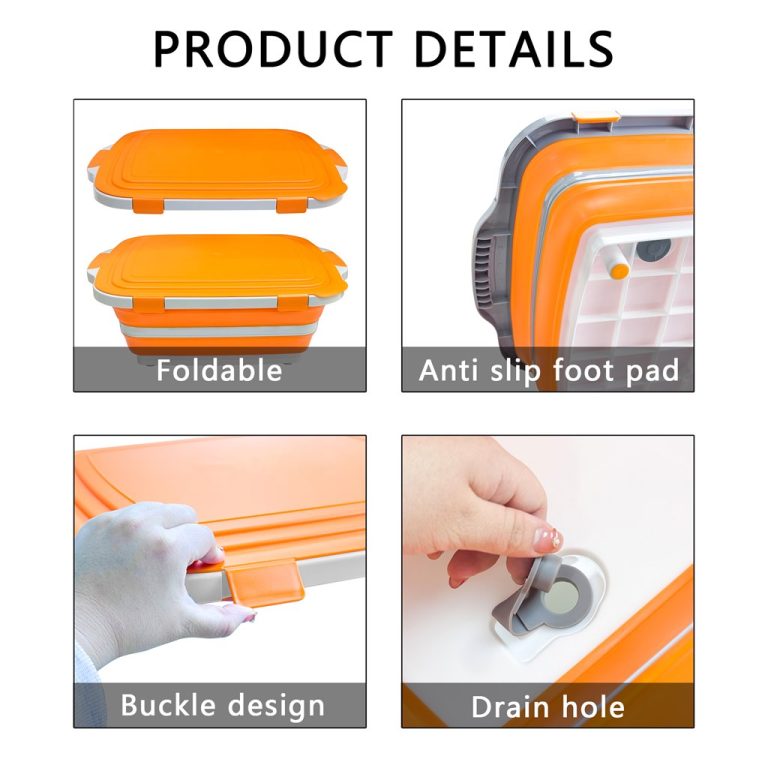
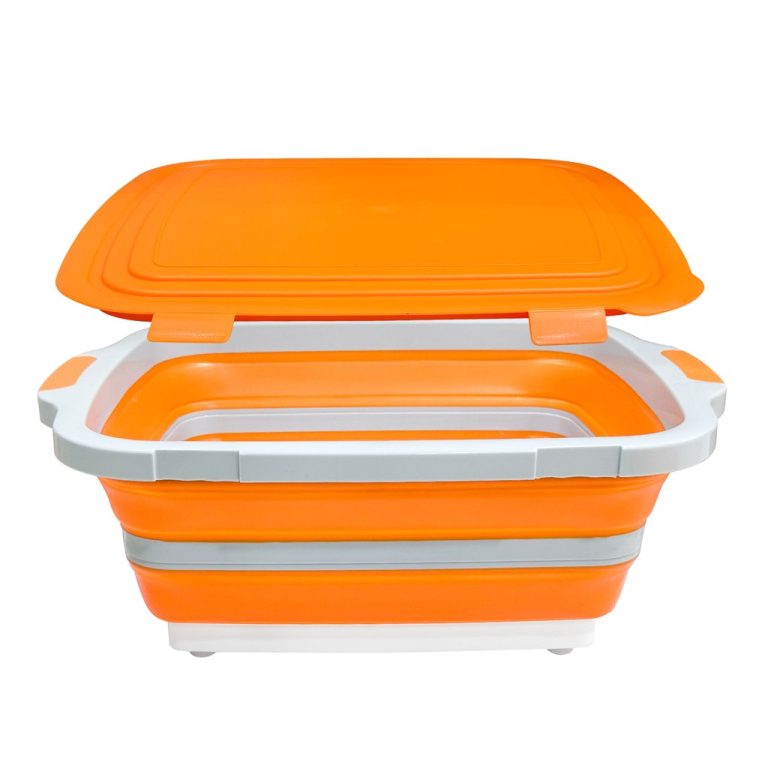
Fold or rotate? A rotating basket turns food in one movement and suits whole vegetables, corn and fish for two. A folding basket opens flat, so it doubles as a tray on the table and packs into a fraction of the space. Most of the trade customers we supply now carry one of each rather than betting the season on a single format, which is why our note on rotating against folding baskets is the page buyers read first.
Handle, lock and coating
| Bare stainless, welded frame | No coating to fail, dishwasher safe, no warranty conversation. Food releases slightly less easily and the basket darkens with use |
| Enamelled steel | Warm look and very easy to clean. Chips at the edges if it is dropped, and a chip stays visible |
| Non-stick coated | Releases fish and marinades best and sells from the box. Any scratch becomes a complaint, so it needs a soft wash and a care card in the pack |
The handle is a safety part, not a detail. A wire loop that folds flat is the cheapest option and the one that gets hot, because it is welded to the frame and heat travels straight into the palm. A wooden or silicone-sleeved handle stays comfortable for the length of a grill session, and the sleeve is what customers thank you for. Whatever the design, the handle should lock upright. A basket that folds shut while it is being carried dumps dinner on the ground, and no instruction card rescues that.
Length matters more than shape. A 30 cm basket with a 12 cm handle puts your knuckles over the fire; the same basket with a 20 cm handle keeps your hand clear. If the basket is going to be sold for a gas grill with a side shelf, measure the handle against that shelf before the order is placed, not after the sample arrives. Our comparison of a basket and a grill topper covers the case where a flat plate does the job instead.
What a retail set should contain
Most baskets leave the factory as single pieces and arrive in the shop as part of a set. The set is what sells, and it is also where the margin sits, so the composition deserves as much thought as the basket itself. Three pieces is the shape that works: one large basket around 30 cm, one small basket around 20 cm for a single portion or a side of vegetables, and a tray the large one sits in so nothing drips on the table.
Beyond that, the extra pieces should be things the customer would otherwise buy separately: a pair of clips to hold the basket shut, a small basting brush, a silicone mitt, a carry bag. Each addition raises the retail price without lengthening the tooling list, but past five pieces the pack stops fitting a standard shelf and starts fitting a gift aisle instead. Our folding basket set with tray, clips and brush exists for the first case and the two-basket mesh set with a folding handle for the second.
For importers, garden centres and brands
Nicebuy produces grill baskets, rotating baskets, folding baskets and tray-and-clip sets as standard production lines, with MOQ 300 pieces per model, samples in 3 to 5 working days and the sample fee credited against the first production order. Mesh aperture, wire gauge, frame size, handle type, coating, set composition, colour box and carton marking are all customisable, and every model is made from food-contact grade materials.
Two configurations move fastest for a barbecue range: the two-basket mesh set with a folding handle, and the folding basket set with tray, clips and brush, usually bundled with tongs and a basting brush so the whole thing can be merchandised as one season display.
Frequently Asked Questions
Bare stainless or non-stick for a grill basket?
Bare stainless if the customer grills often and accepts that the basket darkens. Non-stick if the shop needs the release claim on the box and will put a care card in the pack. Non-stick is not a defect; it is a shorter life with an instruction attached.
What mesh size stops vegetables falling through?
Around 8 to 10 mm covers sliced onion, pepper strips and shrimp. Whole mushrooms and cherry tomatoes want 10 mm or less. Anything under 6 mm stops the fat draining and steams the food instead of grilling it.
Can a grill basket go in the dishwasher?
Bare stainless, yes. Enamel, usually, on a low setting. Non-stick only if the label says so, and never with a heavy powder detergent, which eats the coating edge faster than any spatula.
How many pieces should a retail set have?
Three is the sweet spot: a large basket, a small basket and a tray the large one sits in. Five-piece sets sell to gift buyers but take roughly twice the shelf depth, which is a decision for the shop rather than the factory.
Bottom line
Specify a grill basket by the aperture first, because it decides what the basket is for, then the frame join, then the coating. The two-mesh basket set with a folding handle is the general-purpose listing, the rotating set in 20 and 30 cm is the one that turns food in a single movement, and the folding set with tray, clips and brush is the version for a gift shelf. A basket that drops the food through the mesh has failed at the only thing it had to do.