An enamel BBQ tray is a steel tray with a layer of glass fused onto the surface, and that one detail explains almost everything about how it behaves on a grill. The coating browns food evenly, wipes clean after sticky marinade, and needs no seasoning at all. It also chips if you knock it against the grate, and it cracks under sudden temperature change. Knowing where the coating is strong and where it is fragile decides whether an enamel tray belongs on your grill.
Key takeaways
- Enamel is glass fused onto steel: even heat on the surface, a brittle finish if knocked.
- It is the easiest surface to clean after sugary or sticky marinades.
- Thermal shock is what kills it — never shock a cold tray with high heat or a hot tray with cold water.
- Enamel suits trays and shallow pans; stainless steel suits drain pans and long, hard direct heat.
What enamel actually is
Enamel is powdered glass fired onto a steel base at roughly 800 °C. The glass melts, bonds to the metal and cools into a hard, non-porous skin. That skin is why food releases easily: there are no open pores for proteins and sugars to grip.
Two things follow. First, the surface is chemically inert, so vinegar, tomato and acidic marinades do not react with it the way they react with bare aluminium. Second, glass is brittle. Under the coating there is still steel, which is why one good knock on a grate bar can produce a chip that later rusts.
What an enamel BBQ tray does well
The coating is at its best on vegetables, fish, sliced sausage, halloumi and anything marinated in sugar or honey. Those are the foods that normally weld themselves to a bare metal surface. On enamel they lift off with a spatula and the tray rinses in a minute.
It also holds heat fairly evenly because the steel underneath spreads it before the glass releases it to the food. You get fewer scorched rings where the burner sits.
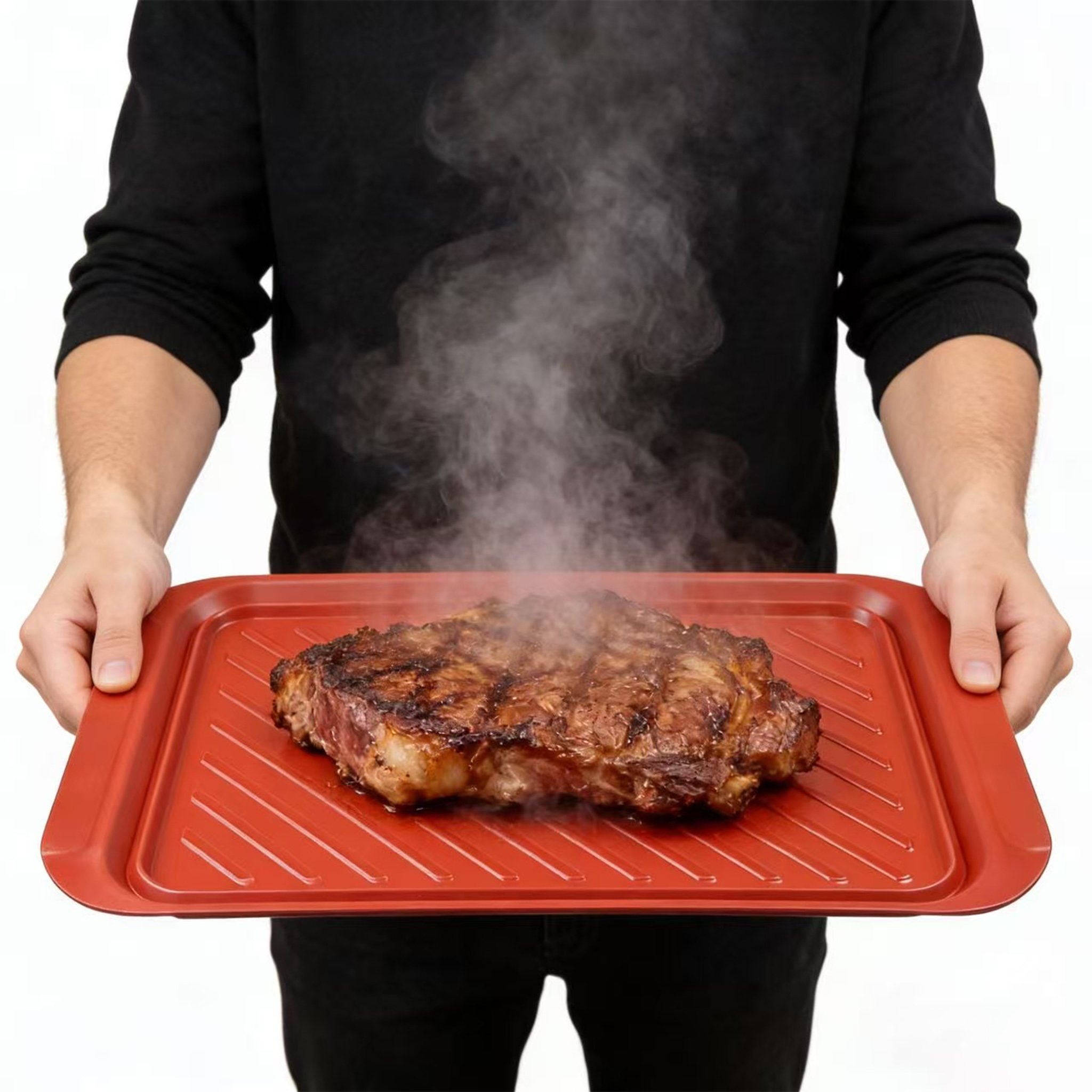
Finally, an enamel tray can go from the grill to the table. The patterned and diagonal finishes exist for that reason — the tray is meant to be seen, not hidden in a cupboard.
Where enamel struggles
Three situations cause most of the damage:
- Thermal shock. A cold tray onto a very hot surface, or a hot tray into cold water, makes the glass contract faster than the steel and the coating crazes. Warm the tray up gradually and let it cool on the grate.
- Impact. Dropping it, banging it on the grate bar or stacking it under a heavy pan chips the edges. The rim is the weakest point.
- Metal tools. A sharp metal spatula scrapes the coating. Use wood or silicone on enamel.
None of this makes enamel delicate in normal use. It means the tray has two rules, and both of them are about avoiding sudden force — thermal or physical.
Enamel, stainless or non-stick
| Surface | Best for | Watch out for |
| Enamel | Trays, serving, sticky marinades, even browning | Chips on impact, needs gradual heating |
| Stainless steel | Drain pans, high heat, metal tools | Food sticks without preheating and oil |
| Non-stick coating | Eggs, delicate fish, low-fat cooking | Degrades above its rated temperature |
If you want one tray for general grilling and serving, enamel is the sensible choice. If you want a pan that drains fat and survives being scraped with tongs, stainless steel is tougher. Many kitchens end up with one of each, and that is not a compromise — the two do different jobs.
Cleaning and care that keeps the coating intact
Let the tray cool to warm, then wash it in hot soapy water with a soft sponge. Burnt-on sugar loosens after five minutes of soaking. A nylon scraper handles stubborn patches; steel wool and abrasive powder do not belong near enamel, because they dull the gloss and open the surface.
Dry it fully before it goes back in the cupboard. Water left sitting on an exposed steel edge is what starts rust at a chip. If a chip does appear, keep the tray for serving rather than grilling and touch the bare spot with a little oil after each wash to slow the corrosion.
Frequently Asked Questions
Can an enamel tray go on a gas grill?
Yes, and it works well. Preheat gradually on a medium setting rather than dropping it straight onto a burner at full power, and check the lid clearance if the tray has standing handles.
Is enamel safe if it chips?
A small chip is not a health problem; the concern is the exposed steel underneath, which rusts and can flake. Retire the piece from cooking once the chipping spreads across a food-contact area.
Do I need to season an enamel tray?
No. Seasoning is for bare cast iron and carbon steel. Enamel is already a sealed glass surface, so oiling it before first use only makes it greasy.
Why does my enamel pan discolour?
Polymerised oil leaves a brown film that is harmless but stubborn. A paste of baking soda and warm water, left for ten minutes, usually lifts it.
Bottom line
Choose an enamel BBQ tray when you want even browning, easy cleaning and something you can carry to the table. Treat it as a tray rather than a hammer — no sudden heat, no metal tools, no cold water on a hot surface — and it will outlast most non-stick pans.
Our patterned heat-resistant enamel tray, the red diagonal tray and the black diagonal tray all take direct grill heat, and the two-piece enamel mesh set adds a draining layer for vegetables. Everything sits on the grill pan and tray page.
Enamel and steel do different jobs, so most kitchens end up with both — the guide to a grill pan for a gas grill covers what to measure. If you grill a lot of small pieces, basket or flat topper is the other decision worth making.