A collapsible basin leak almost never means the product is finished. In most cases the water is escaping through one of six places, and five of them are corrected in under a minute without tools. The sixth is the one worth a warranty conversation.
Work through the list in order. It runs from the fastest check to the last one.
Key takeaways
- The drain plug and the fold line cause most leaks, not the material.
- Never fold a basin while there is water in it.
- Check the fold is fully opened before blaming the plug.
- If a crease is split, stop using it and claim under warranty.
1. The drain plug is not seated
The plug sits in a tapered seat, and a quarter turn that feels tight is not always sealed. Press the plug in firmly with the flat of your thumb, then turn until it stops rather than until it resists.
The check is simple: fill the basin with two litres and watch the plug for thirty seconds. If a single drop appears at the plug, press and turn again. If it still weeps, look at the next two items before replacing anything.
2. The folding wall is not fully opened
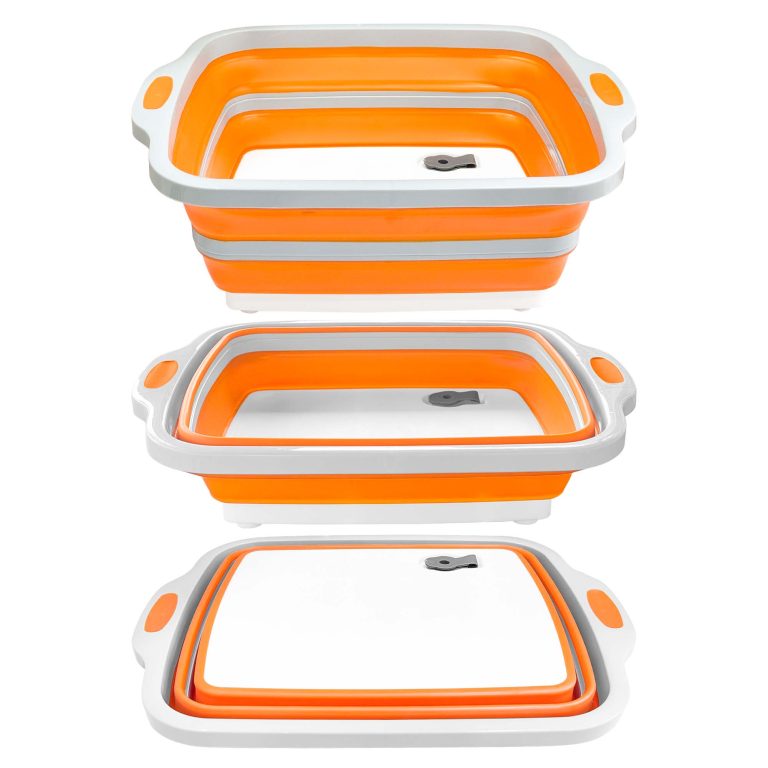
This is the most common cause we see, and the least obvious. A basin whose wall is 95 percent open still looks flat from above, but one crease stays slightly bent and water seeps through the fold line at the bottom.
Run your finger around the inside of the lowest fold. You should feel a crisp, even ridge all the way around. If any section feels soft or rounded, press the base down again with both hands flat and spread outward.
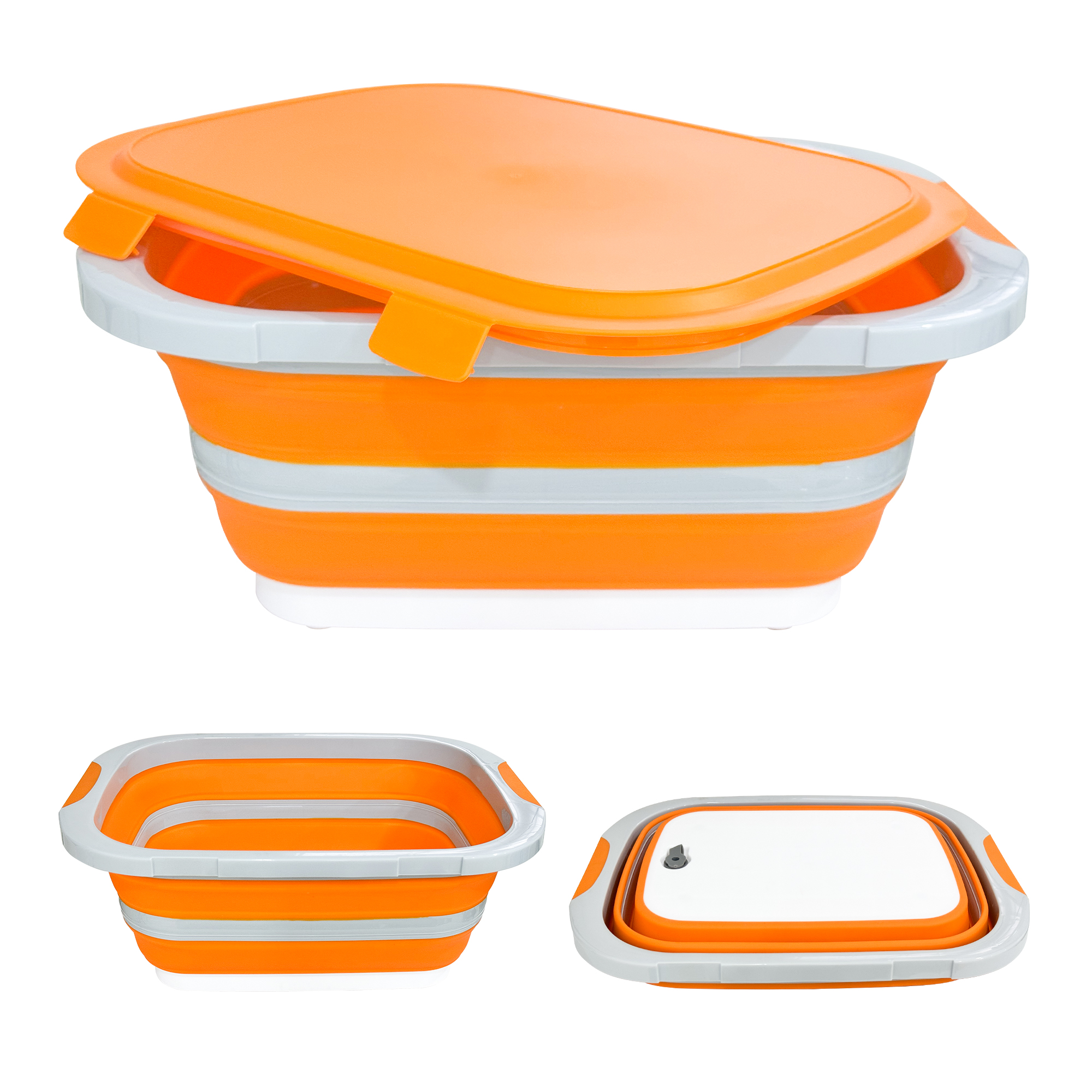
3. The basin is overfilled
Every folding basin has a working line below the top edge. Fill above it and the water pressure pushes the upper crease outward, opening a gap that does not exist at normal levels.
The test is to watch the wall, not the water. If the sides bulge outward when the basin is full, it is overfilled. Take out a litre and the bulge disappears.
4. There is grit in the seal or the plug seat
Sand, flour or a coffee ground trapped under the plug or in the gasket groove will hold the seal open by a fraction of a millimetre. That is enough for a slow weep.
Remove the plug, rinse the seat under a tap and wipe the groove with a soft cloth. Do not use a knife or a scouring pad, which will scratch the sealing surface and turn a small problem into a permanent one.
5. A crease has been scratched or cut
A cut through the fold wall cannot be repaired at home. Look for a straight line or a nick on the outside of the crease, usually caused by a knife left in the basin or by stacking it against a sharp edge.
If you find one, stop using the basin for liquid. Use it for dry storage and raise a warranty claim.
6. The basin was frozen and then folded
TPR stays flexible well below zero, but a frozen basin is stiff. Forcing the wall to fold at -18 °C puts stress into the crease that the material was never designed to take, and micro-cracks appear along the line.
Let the basin come to room temperature before folding. If a basin that was frozen now leaks along a crease, that is usually the reason.

When it is a quality issue
| Symptom | Likely cause | Action |
| Water beads along a crease from new | Incomplete moulding or a trapped void | Warranty claim |
| Leak appears at the plug thread | Plug moulded out of tolerance | Replacement plug |
| Wall stiffens and cracks within months | Material grade below specification | Warranty claim with photos |
| Slow weep after several months of use | Gasket wear or grit | Clean first, then replace the plug |
What to send to after-sales
- Order number or the invoice reference.
- Two photos: the basin filled, and a close-up of the leak point.
- A five-second video of the basin half filled and tilted.
- The batch or carton code if it is printed on the label.
With those four items a supplier can usually identify the cause without a return shipment.
Frequently Asked Questions
Can I replace the drain plug myself?
On most models yes. The plug pushes out from below with firm thumb pressure and a replacement pushes back in. Ask your supplier for a spare, which is far cheaper than replacing the basin.
Does a small weep mean the basin is defective?
Not necessarily. Check the seat, the fold and the fill level first. If it still weeps after those three, it is a defect.
Can I seal a leak with silicone?
No. Household sealant will not bond reliably to TPR and will fail at the first fold. It also makes the basin unsafe for food contact.
How long is a basin covered?
Our basins carry a twelve-month warranty against manufacturing defects in the fold, the plug and the lid. Normal wear on a crease is not a defect.
Bottom line
Work through the plug, the fold, the fill line and the seal in that order. Those four cover the great majority of leaks we are asked about, and none of them needs a tool. When the crease itself has failed, that is the point to involve the supplier.
If you are still losing water after those checks, contact us with the order reference and a photo. If you are choosing a model and want one that is easier to seat and clean, look at the 16L collapsible prep box or the 18L storage bucket with drain hole.