Fried chicken goes soft on a plate of kitchen paper in about two minutes. Learning how to drain oil from fried food starts with one point: the paper is not the problem, the missing air underneath is. Anything sitting flat on an absorbent surface is being steamed from below by its own moisture, and no amount of blotting will fix that afterwards.
Key takeaways
- Drain on a raised rack, never flat on paper. Air underneath is what keeps the crust crisp.
- Salt immediately, or at the table. Salt in the middle of the resting time pulls moisture to the surface.
- Oil temperature matters more than draining time: under 175 °C and the food has already absorbed oil before it reaches the rack.
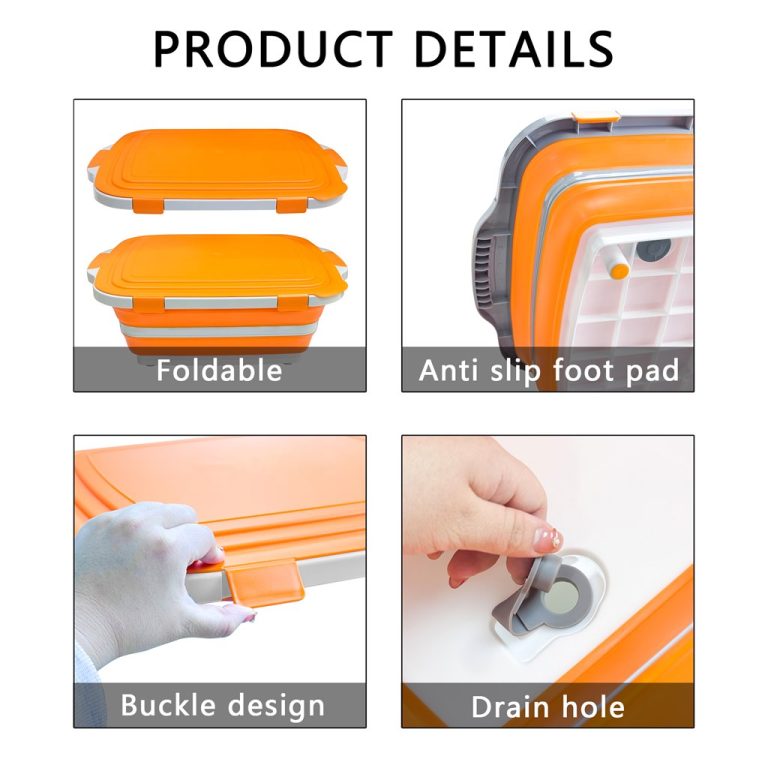
- A tray with holes and raised feet does two jobs: it drains, and it keeps the tray off the counter so the underside stays clean.
How to drain oil from fried food, and why paper towels fail
When food leaves the fryer it is still releasing steam, and steam has to go somewhere. On paper, the underside is sealed against a wet surface, so the escaping moisture condenses straight back into the crust. On a rack, the steam leaves downwards into open air, and the crust sets firm.
The difference is measurable: chicken drained on paper is soft on the underside within two minutes, chicken drained on a rack is crisp top and bottom for ten to fifteen minutes. If the food has to wait longer than that, the answer is a low oven, not more paper.
Frying temperature is the real variable
| Oil temperature | What happens |
| 150 to 165 °C | The coating sets slowly and absorbs oil. This is the soggy batch |
| 175 to 180 °C | The crust sets in seconds and seals the surface. This is the correct range for chicken, fish and chips |
| 190 °C and above | The outside browns before the inside is cooked, and the oil starts to degrade |
A cheap probe thermometer costs less than one failed batch of oil. If you fry more than twice a month, buy one and use it every time.
What to look for in a draining tray
| Feature | Why it matters |
| Hole size and density | Round holes of 4 to 6 mm drain oil without letting a chip or a wing fall through |
| Raised feet | Lifts the tray off the counter, so oil collects underneath rather than pooling around the food |
| Depth of the tray | Two centimetres of clearance is enough for a family batch of wings |
| Material | Food-grade stainless rinses clean and does not hold oil smell. Non-stick coatings release food more easily but are scratched by metal tongs |
| Diameter | 38 cm holds a whole batch of chicken without stacking, which is what stops the pieces steaming each other |
| Oven safe | Lets you move the tray into a 90 °C oven to hold the batch while the next one fries |
The same logic on the grill
Draining matters on the grill too. Wings, drumsticks and vegetables on a barbecue sit in their own fat if they cook on a solid surface, which is why a tray with diamond holes and a raised base comes off the grill far crisper than a flat baking sheet.
- Use a pierced tray over the grate for wings, halloumi and thick vegetable slices: anything that would otherwise pool fat.
- Use a mesh tray instead of a grate when the food would fall through: fish, small peppers, prawns.
- Keep a solid tray under the pierced one to catch the drips, and you have no fat fire and no scrubbing afterwards.
How the sizes and coatings compare is covered in our guides to grill pan sizes and materials and to enamel barbecue trays; if you are buying for a gas grill specifically, the gas grill pan guide covers what fits.
Holding fried food without losing the crust
- Drain on the rack for two minutes at room temperature. This is the crispness window.
- Move the rack into a 90 to 100 °C oven if the batch has to wait. Never cover it, and never stack it.
- Salt once, immediately, or leave it to the table. Salting twice draws moisture out of the crust.
- Serve on the same rack. A plate reintroduces the flat-surface problem at the last moment.
For shops, garden centres and brands
Nicebuy produces drain trays, pierced grill pans and mesh barbecue trays as standard production lines with MOQ 300 pieces per model, samples in 3 to 5 working days with the sample fee credited to the first production order, colour box or gift box with export carton as standard, and every model is made from food-contact grade materials. Size, hole pattern, coating, handle style and logo printing are customisable, and pierced trays with a matching solid base are the combination most often ordered for retail sets.
Frequently Asked Questions
Is a rack better than paper towels?
For crispness, yes, with no exceptions. Paper is useful for patting meat dry before cooking, where the surface is flat and the point is to remove water rather than keep air underneath.
Should I drain fried food on a wire rack in the oven?
Only if you keep it at 90 to 100 °C. A warm oven holds the crust; a hot oven continues cooking the food and dries it out from the inside.
Why does my fried chicken get soggy even on a rack?
Usually the oil was below 170 °C, or the pieces were crowded in the pan so the temperature dropped. Fry in smaller batches and check the oil between them.
Does the tray need to be non-stick?
No. A drain tray rarely has food stuck to it because the food sits above the surface. Non-stick helps on the solid base that catches the drips, where fat sets as it cools.
Bottom line
Fry at 175 to 180 °C, drain on a raised rack and salt once. The 38 cm stainless oil drain tray takes a whole family batch without stacking, the stainless drain grill pan in three sizes is the same idea for the oven and the barbecue, the titanium baking pan is the solid base to catch drips underneath, and the two-piece enamel mesh tray set keeps small pieces from falling through the grate. Air underneath is the whole trick.