A collapsible storage bucket tends to get bought twice: first as a cheap folding bucket that lasts a season, then again as a proper one that lasts years. The difference is almost never the material. It is whether the walls keep their shape when the bucket is full, whether the lid actually seals, and whether there is a drain hole where you need one.
Key takeaways
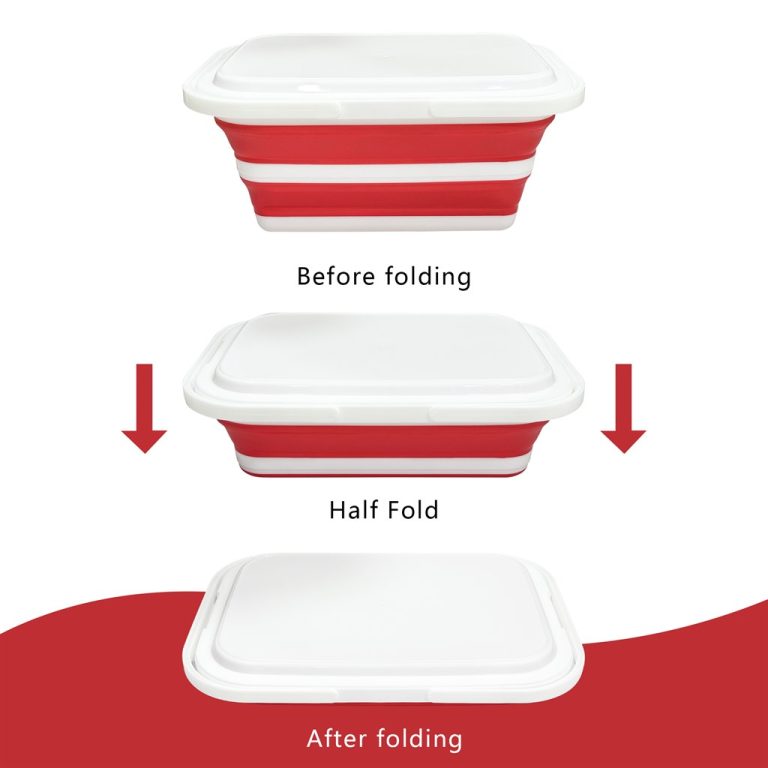
- A bucket earns its place through three things: it nests flat, it seals, and it empties without being tipped. Miss any one of them and it becomes a box that does half a job.
- 16 to 18 litres is the size that carries a meal, a load of dishes or five kilos of ice. 30 litres is a storage tub, not a bucket.
- The base fails first. A folded wall on a soft base bulges and tips; a reinforced rim and a rigid base hold a full load upright.
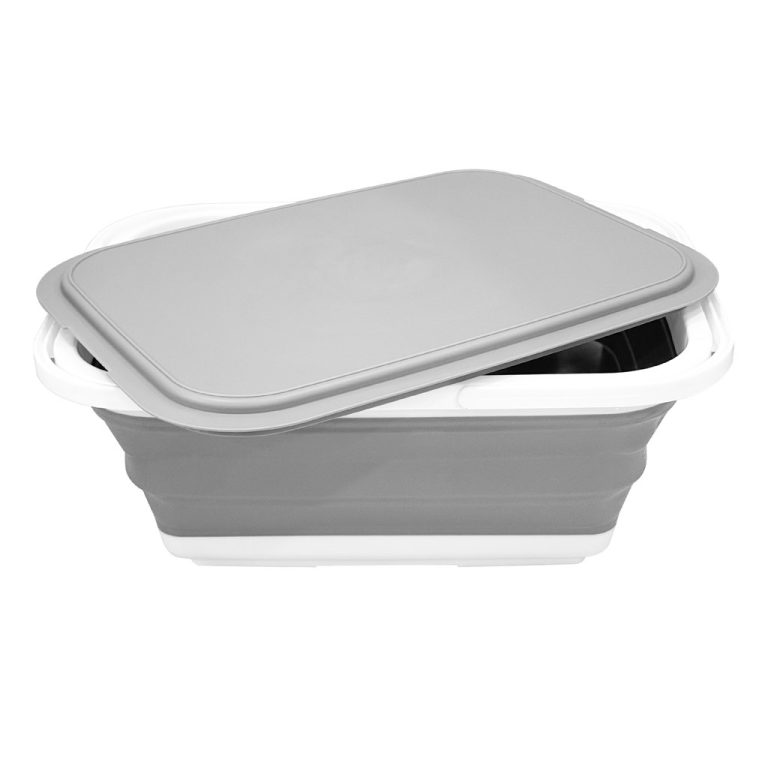
- A sealed lid and a drain hole are not opposites. The good version has both, so it carries water one way and empties without being lifted the other.
Collapsible storage bucket, basket or tub: three different jobs
A bucket is for liquid and for carrying. Walls high enough to hold water, a base rigid enough not to bulge, and a lid that seals or a plug that drains. Once you ask it to do something else, the shape is wrong for the job.
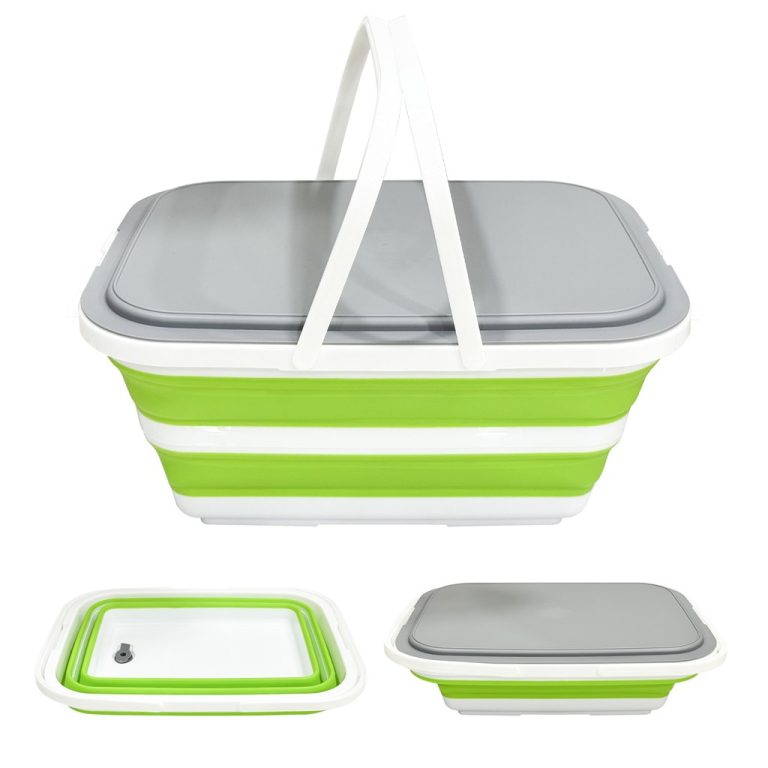
A folding storage basket with a sealed lid is the opposite trade: it stores dry goods, packs by nesting, and the wide top makes loading and unloading quick. The sealed lid keeps dust and rain out, which is what a storage item needs and what a carrying item does not.
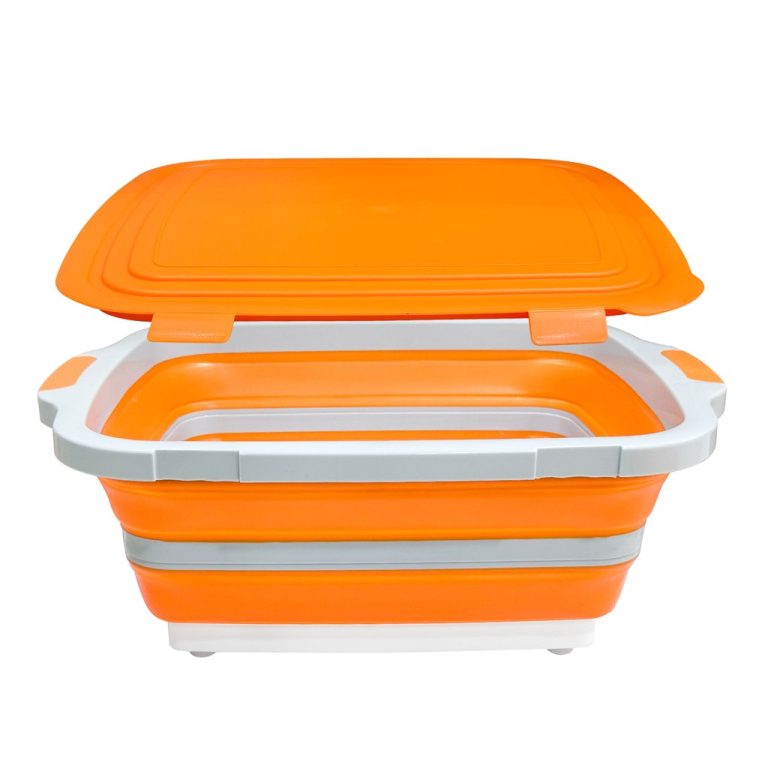
A square prep box sits between the two. A 16 litre prep box has a flat bottom and square sides, so it holds marinade without wobbling and it stacks against the side of a car instead of rolling. If your camp kitchen is arranged around a table rather than a sink, this is usually the piece that gets used most.
The three together cover a camp kitchen in about the space of one rigid crate, which is the whole reason to buy collapsible in the first place. Our sizing notes on 8, 16 and 30 litre basins cover the washing half of the same setup.
Lid, drain hole and handle
| Sealed lid, no drain hole | Carries water and marinade. Has to be tipped to empty, which is the moment a full bucket goes over |
| Open rim, no lid | Fast to load and unload, nests deeply. Dust, rain and animals get in, so it is storage rather than transport |
| Lid plus drain hole | Does both jobs: carry it sealed, empty it without lifting. The plug is a 20 cent part that decides the review |
The handle deserves as much attention as the lid. Two side handles let one person lift a full bucket with both hands and keep it level; a single top handle makes a full bucket hang at an angle and pour over the rim. If the bucket is going to be carried any distance, a rigid rim between the handles stops the mouth folding shut against the load.
Look at the fold line, not the wall. The wall of a folding bucket is rarely the failure; the crease where the wall meets the base is, because it takes the whole weight of the contents every time the bucket is lifted. A bucket with a moulded, thicker base and a clean crease above it holds up; one with a thin base and a sharp crease splits there.
What fits in 16, 18 and 30 litres
An 18 litre bucket with a sealed lid and a drain hole is the size that covers the most jobs: a washing-up load for four, a five kilo bag of ice with bottles around it, or a large joint left to marinate on the drive. The drain hole is what makes it a kitchen item rather than a garden item, because a full bucket that can be emptied in place never has to be lifted onto a table.
Sixteen litres is the same sort of load in a slightly shorter body, which matters if the bucket has to slide under a bench. Thirty litres is a different object: it holds bedding, dry goods, a folded awning or a week of gear, and it is too heavy to carry when full. Buy the 30 for storage and the 16 or 18 for everything that gets wet.
For shops, garden centres and brands
Nicebuy produces collapsible buckets, folding storage baskets and square prep boxes as standard production lines, with MOQ 300 pieces per model, samples in 3 to 5 working days and the sample fee credited against the first production order. Capacity, wall height, lid type, drain hole, handle arrangement, colour and colour box are all customisable, and every model is made from food-contact grade materials.
Two configurations move fastest in a camping range: the 18 litre bucket with a sealed lid and drain hole, and the 16 litre folding storage basket with a sealed lid, usually merchandised as a pair so a customer can see the wet job and the dry job side by side. The square 16 litre prep box is the third piece for shops that already sell a camp kitchen range and want the tabletop version.
Frequently Asked Questions
Is a collapsible bucket as strong as a rigid one?
For carrying water, yes, if the rim is reinforced and the base is rigid. What fails on cheap buckets is the crease where the wall meets the base rather than the wall itself, so the base and the rim are the two things to check in the hand.
Can a collapsible bucket take hot water?
Hot washing water is what it is made for. Boiling water is not, and it is not a question of the material so much as of the fold line and of your hands. Let the kettle cool before it goes in.
How do I stop a folding bucket smelling?
Dry it open and upside down with the lid off. The smell comes from a closed bucket with a damp crease, not from the material, and a bucket left sealed wet for a week will hold that smell for months.
What size for a family of four?
Sixteen to eighteen litres for dishes and general camp use, plus a 30 litre tub for dry storage. One 30 litre bucket is too heavy to carry full and too big to pack, which is why the two sizes are usually bought together.
Bottom line
Buy the collapsible storage bucket for the job, not the litre count on the label. The 18 litre bucket with a sealed lid and drain hole carries water and empties in place, the 16 litre storage basket with a sealed lid keeps dry gear dry and nests to nothing, and the square 16 litre prep box is the one that stays level on a table. A fold line that splits in the first season costs more than the difference in price ever saved.