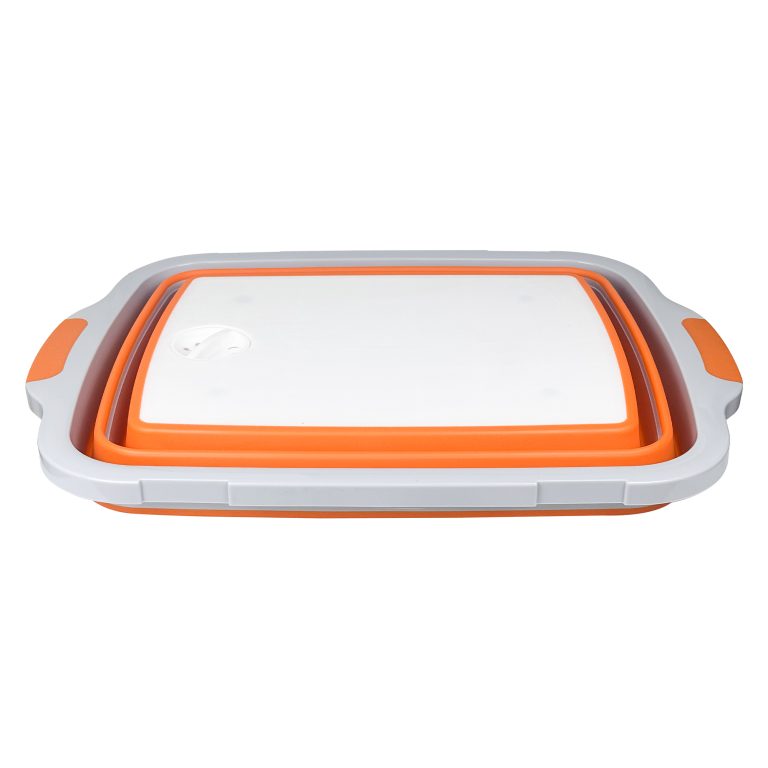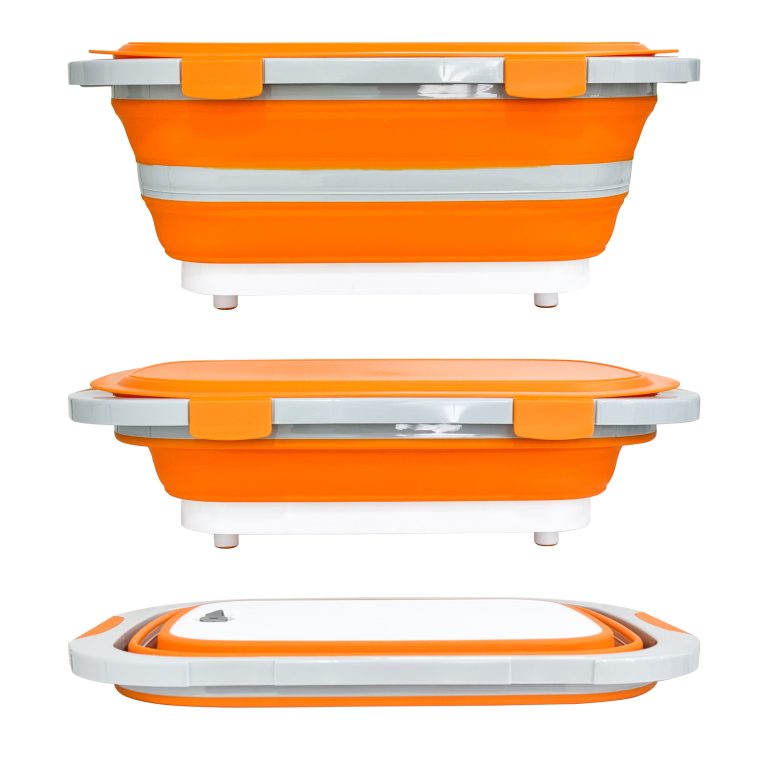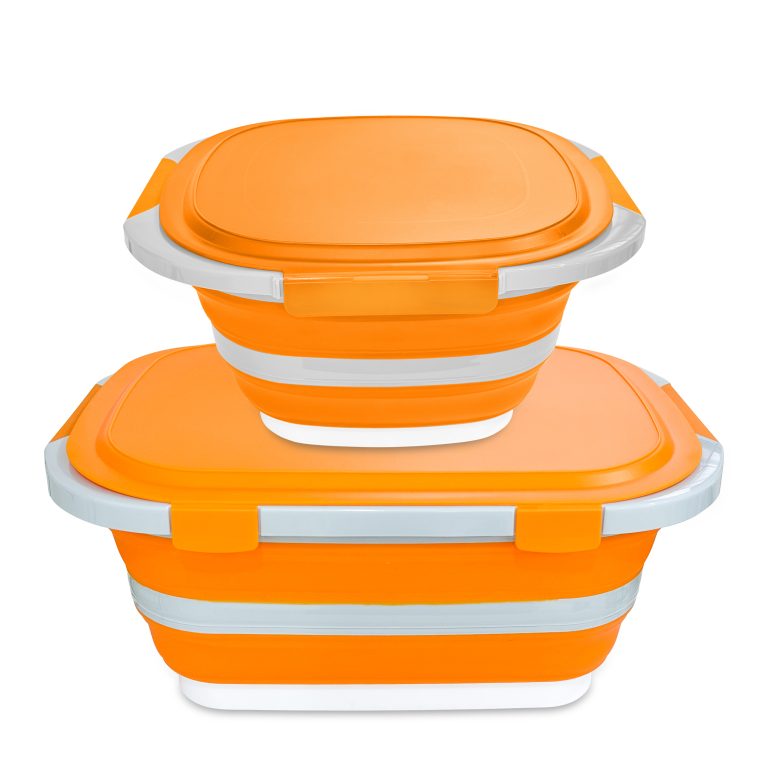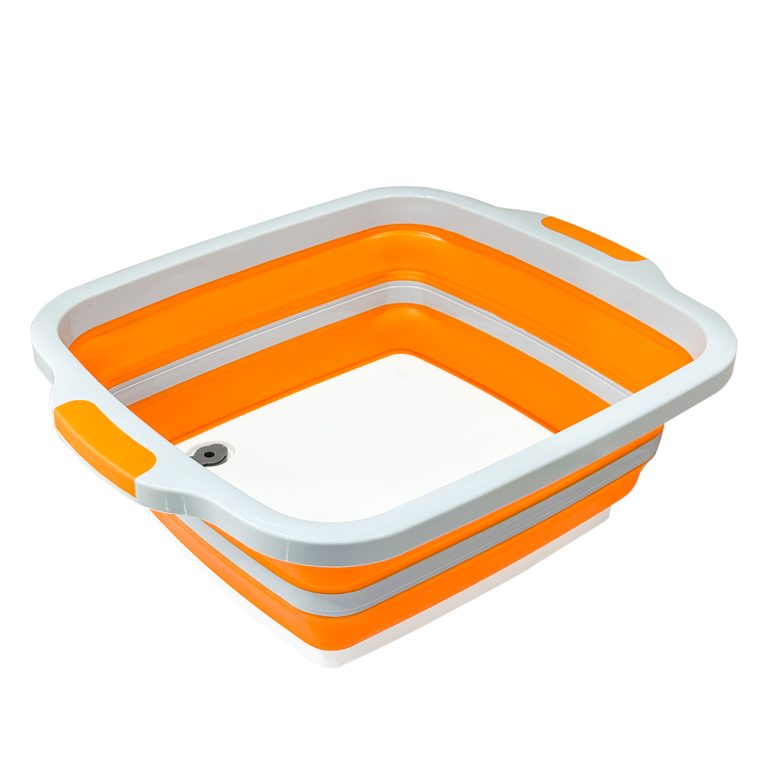
Are collapsible basins dishwasher safe? The short answer is yes, on a normal or cool cycle. What shortens their life is the drying stage, not the washing stage. The 120 °C rating is accurate, and it still does not mean unlimited dishwasher use.
Here is why the 120 °C rating does not mean unlimited dishwasher use, where to place the basin, and how to wash it by hand when that is the better choice.
Key takeaways
- Top rack, normal or eco cycle, no heated dry.
- Open the basin out fully before loading it, so hot water reaches the fold valleys.
- Repeated heated drying is what ages the folding wall.
- Hand washing takes under a minute and always extends the life.
Why 120 °C is not the whole story
A 120 °C rating describes the temperature the material tolerates in contact with heat. A dishwasher is a different kind of stress. The wash water sits around 55 to 65 °C, which is comfortable for the material. The drying stage pushes air at 65 to 75 °C across the surface for twenty to forty minutes, and that repeated warm flex is what slowly takes the elasticity out of a TPR fold.
So the rating is accurate and the concern is still real. Both things are true, and the fix is simply to switch off the heated dry or accept a shorter service life.
Where to put it in the dishwasher
Top rack, always. The bottom rack sits closer to the heating element on most machines, and it is where the heaviest jets hit. A basin on the bottom rack will be pushed around and may end up inverted over a jet, which fills the fold with hot water and leaves it there through the dry cycle.
Open the basin out completely before loading. A basin placed folded traps water in the creases, which is the opposite of what you want.
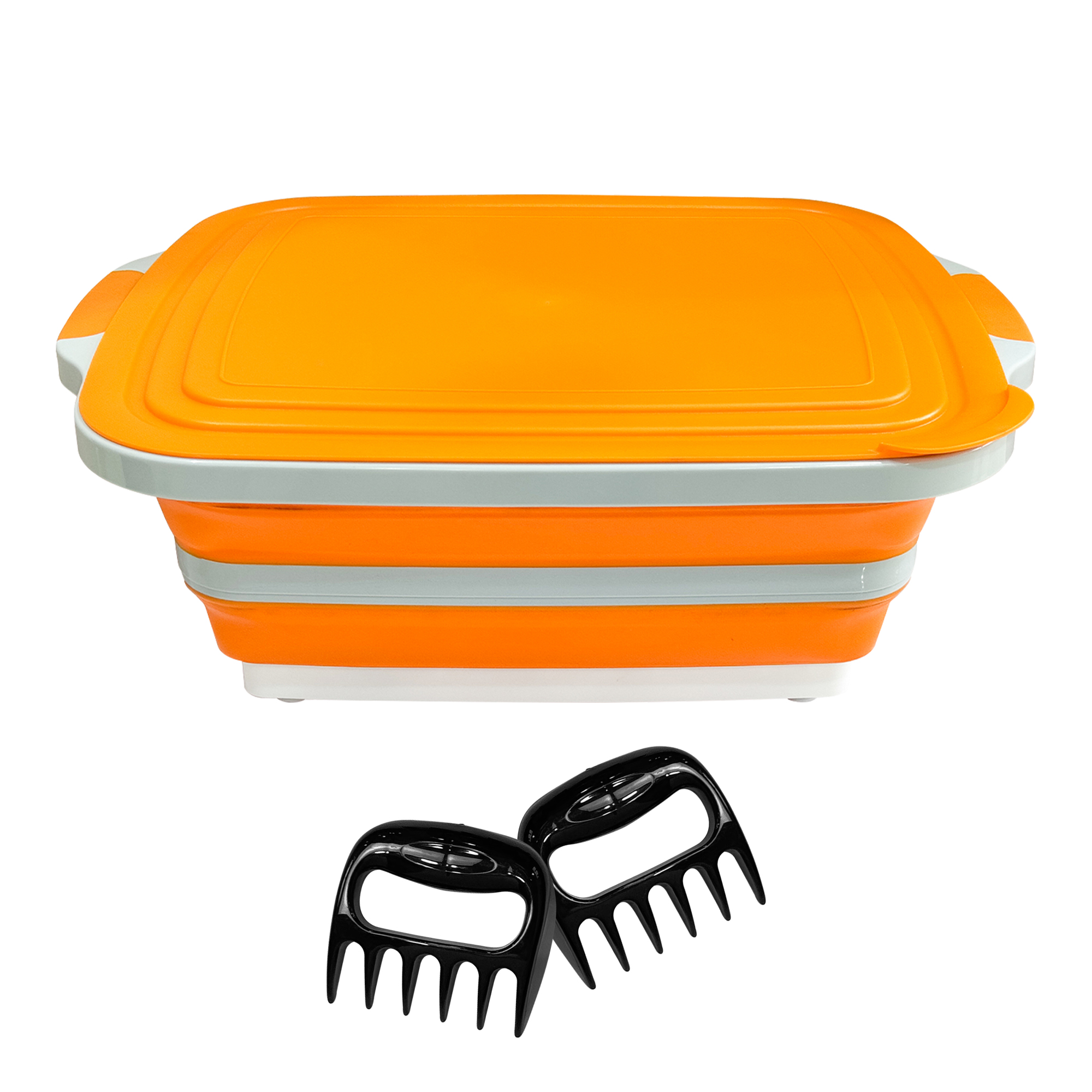
Checklist before you load it
| Setting | Recommendation | Reason |
| Cycle | Eco or normal | Lower wash temperature, longer but gentler |
| Heated dry | Off | Repeated warm drying is the main cause of stiffening |
| Rack | Top | Further from the element, gentler jets |
| Loading | Fully open | Lets water drain out of the fold valleys |
| Lid | Separate, not latched | Trapped moisture and pressure on the gasket |
If your machine has an intensive or sanitising cycle, keep the basin out of it. Those programmes run hotter for longer and are designed for stainless and ceramics.
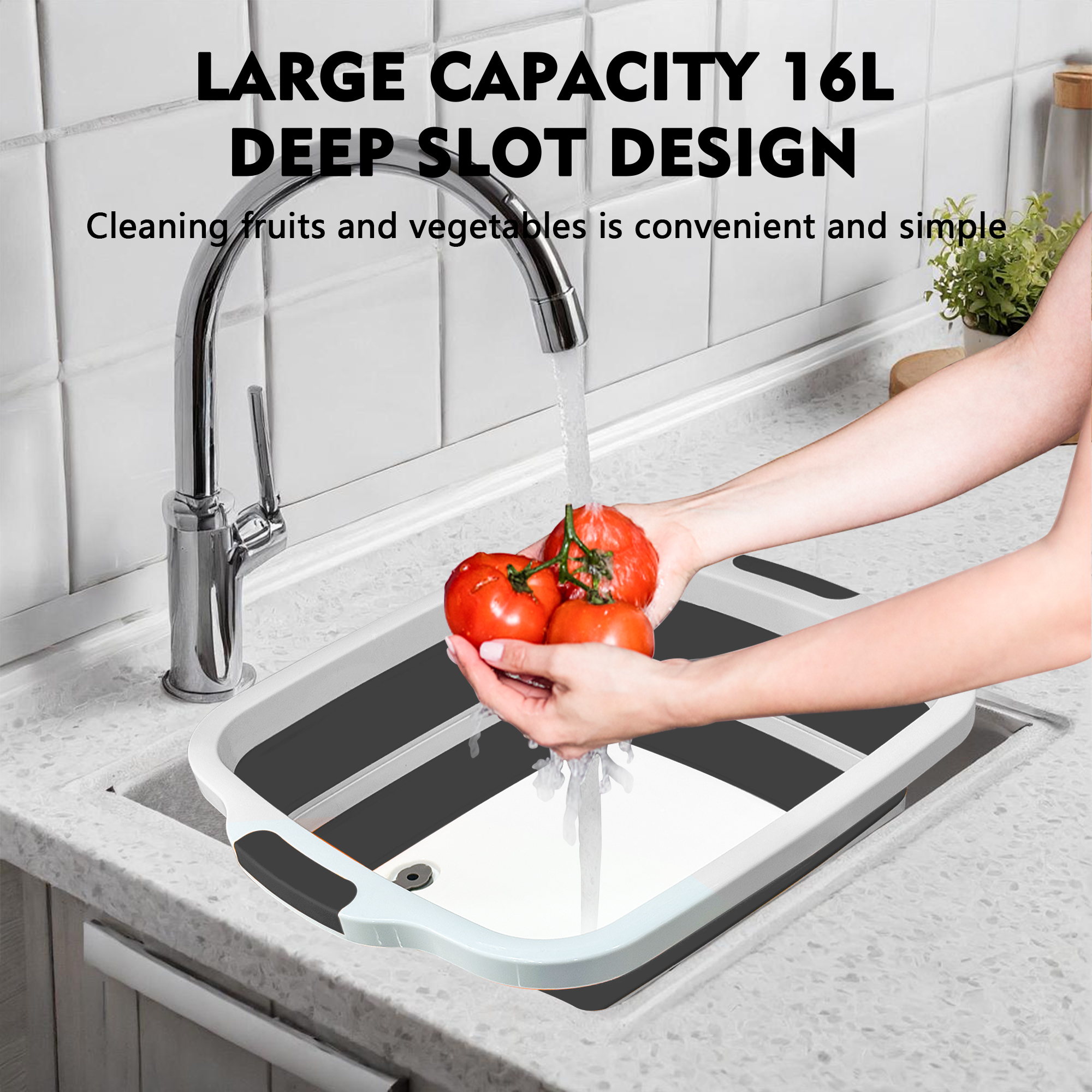
Hand washing in three steps
- Rinse with warm water. No need for a soaking stage; the surface does not absorb food.
- Wash with a soft sponge. A drop of washing-up liquid is enough. Avoid abrasive pads, which scratch the fold.
- Dry along the creases. Run a cloth through each fold valley, then store the basin open if you have room.
For a basin used at a campsite or on a boat, this is usually the only option anyway, and it takes less time than emptying the dishwasher.
Frequently Asked Questions
Can I pour boiling water into it to sterilise it?
Yes, the material handles 100 °C. Pour slowly, set the basin on a heat-resistant surface, and do not pour boiling water into a basin that has just come out of the freezer.
My basin went white after dishwashing. Is it damaged?
A light film is usually detergent residue or hard-water scale. Rinse with a little vinegar in warm water. If the white area feels rough and stays after rinsing, the surface has been abraded.
Can the lid go in the dishwasher?
Yes on the top rack. Remove the gasket first if it is detachable, wash it by hand and press it back once both parts are dry.
Is it safe to wash next to non-stick pans?
Better to keep them apart. The fold wall is softer than a pan edge, and a basin pressed against a sharp corner through a wash cycle can pick up a scratch.
Bottom line
Dishwasher safe means dishwasher safe on a sensible setting. Top rack, cool cycle, no heated dry, loaded open. Do that and the basin will handle years of machine washing. Switch the heated dry off and you remove most of the wear in a single step.
Both are safe on a cool top-rack cycle: a breading bowl with a leak-proof buckle lid and a collapsible storage box with a table top.
All our basins use food-grade PP and TPR rated from -20 °C to 120 °C, so a normal dishwasher cycle is well inside the material's range. See the 30L multi-purpose basin with sealed lid or the 10L prep basin with sealed lid, and check the FAQ page for more care questions.