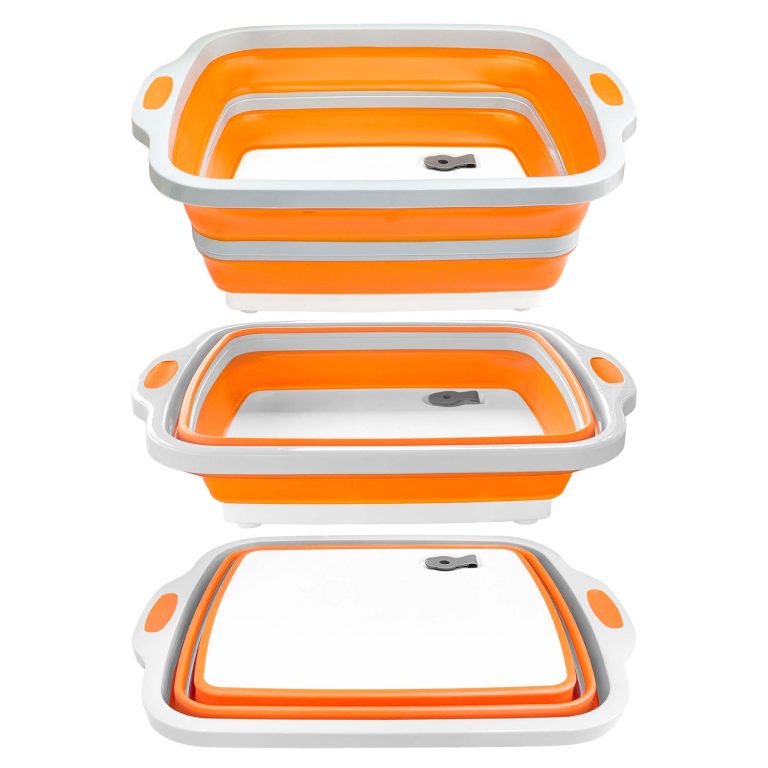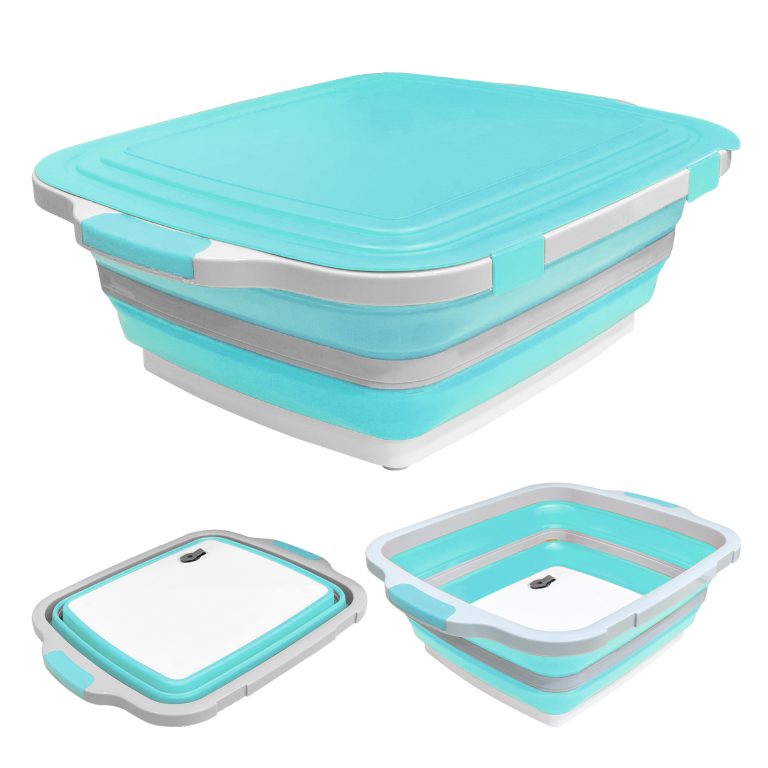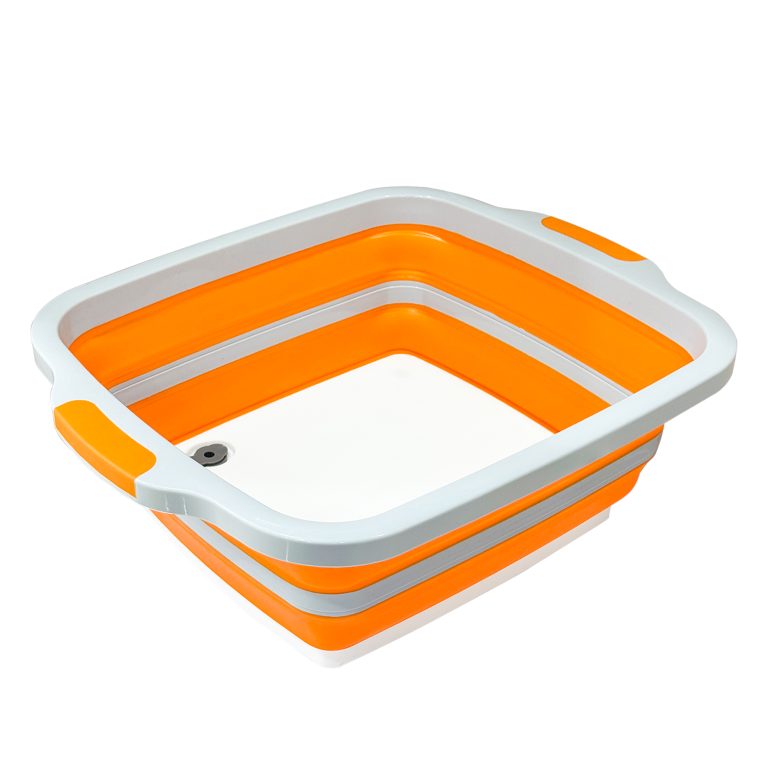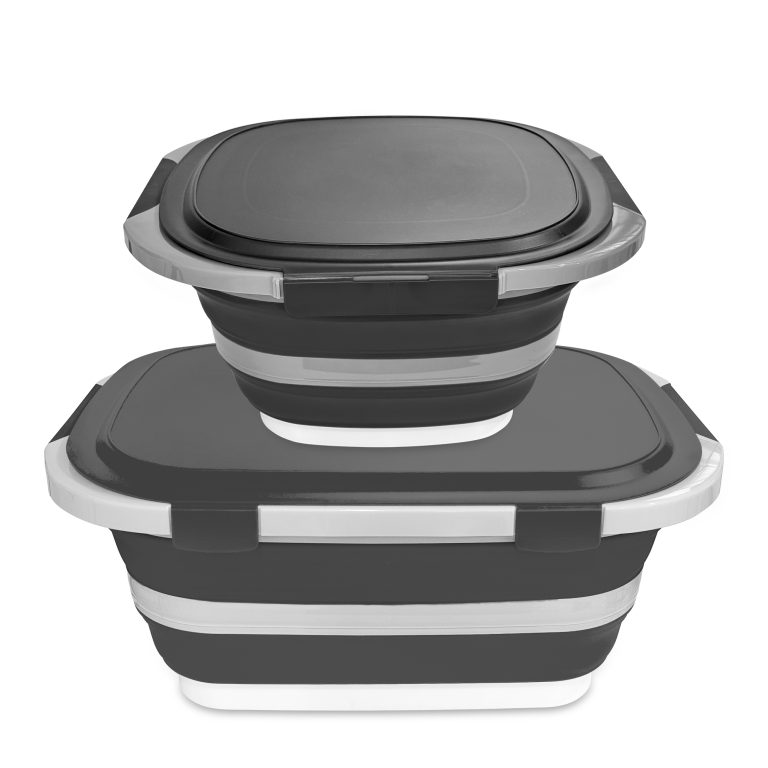
PP vs TPR is the question behind every folding basin, and the answer explains why the product feels like one object when it is really two. The base and the rim are a rigid plastic that holds its shape under a full load of water; the folding wall is a soft one that bends a few thousand times without splitting. Getting those two materials to bond cleanly is most of what a basin factory actually does.
Here is what each material contributes, what the temperature figures mean in a real kitchen, and three quick ways to tell a good material mix from a cheap one.
Key takeaways
- PP forms the rigid body, rim and drain fittings.
- TPR forms the folding wall and takes the fatigue.
- The two parts are co-moulded, so the bond line matters as much as the materials.
- Rated range on our basins is -20 °C to 120 °C.
Why two materials instead of one
A basin that folds needs a wall that is stiff enough to hold a column of water and soft enough to crease without cracking. No single food-grade plastic does both well. Rigid PP creases become stress lines and split within a few hundred folds. A soft material alone cannot carry water without bulging or collapsing.
Co-moulding solves it: the rigid sections are moulded first, the soft material is injected against them, and the two fuse along the join. On a well-made basin that join survives the same number of cycles as the fold itself.
What PP does
Polypropylene is the workhorse plastic of food-contact kitchenware. It is stiff, light, resistant to most kitchen chemicals and does not absorb water. In a collapsible basin it forms the base, the rim, the drain plug housing and the lid.
Good PP has a slightly waxy surface and a dull sound when tapped. It also resists staining reasonably well with tomato sauce and turmeric, though a long soak in either will leave a tint on lighter colours.
What TPR does
TPR stands for thermoplastic rubber. It behaves like rubber, folds like rubber, and can still be injection moulded and recycled in the same plant as the rigid parts. In a basin it forms the concertina wall where all the movement happens.
The quality question with TPR is the grade. A high-grade compound keeps its elasticity after repeated hot and cold cycles. A cheap filler-heavy compound goes chalky, stiffens at the creases and eventually tears along the fold line.
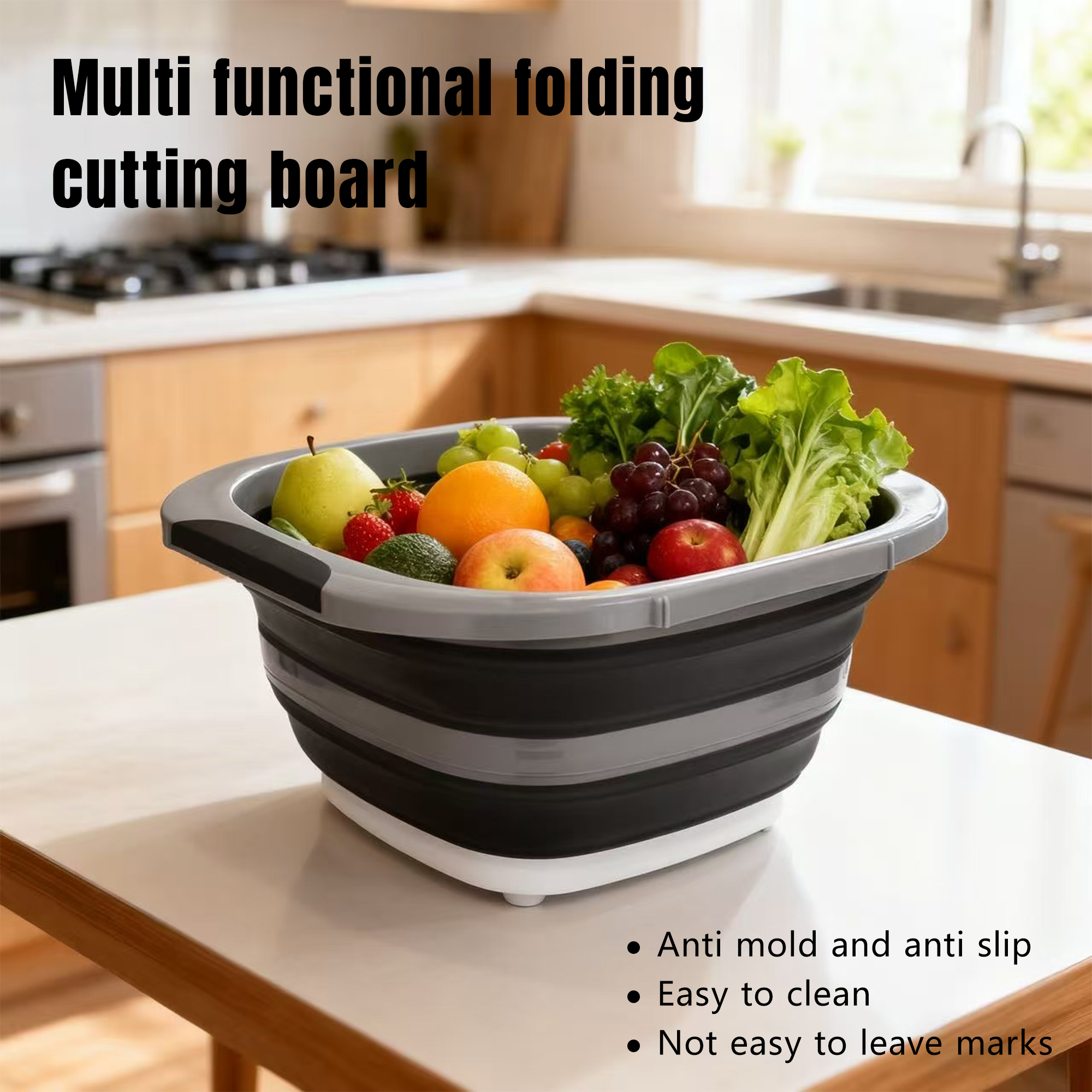
What -20 °C to 120 °C covers
| Situation | Temperature | Within range |
| Hand-hot dishwater | 45 to 55 °C | Yes |
| Hot water from a tap | up to 65 °C | Yes |
| Boiling water poured in | 100 °C | Yes, cooled briefly |
| Freezer storage | -18 °C | Yes, do not fold while frozen |
| Car boot on a summer day | up to 70 °C | Yes |
The limit is not the material alone. Boiling water in a basin that is sitting on a cold stone counter puts stress on the lower fold. Let it stand on a board or in the sink.
Three checks for a good material mix
- Bounce back. Squash the folded wall and release. A good grade returns to shape immediately. A filled compound stays dented for a second or two.
- Smell after hot water. Fill with hot water, wait three minutes, pour out and smell. A faint warm-plastic note is normal. A sharp chemical smell is not.
- Look at the crease. Fold and unfold a section twenty times and check the line. Faint lightening is normal wear. A white, dry-looking band means the compound is filler-heavy.

Frequently Asked Questions
Does TPR age?
All elastomers age slowly. Sunlight, ozone and repeated high heat are the main causes. Stored folded and out of direct sun, a good grade stays flexible for years.
Can I pour boiling water straight in?
Yes, the material handles 100 °C. Pour slowly and set the basin on a heat-resistant surface. Very hot water in a frozen basin is the one combination to avoid.
Is TPR the same as silicone?
No. They feel similar but they are different polymers with different cost and temperature profiles. Silicone tolerates higher heat; TPR is cheaper and bonds more easily to rigid PP.
How do I know the grade from the paperwork?
Ask for the material declaration and the migration test report. Both should name the grade of PP and of TPR, not just say "food grade".
Bottom line
A collapsible basin is a two-material product, and the material choice shows up in how the fold feels after a year. PP carries the load, TPR carries the movement, and the join between them decides whether the basin stays watertight.
Both materials in our basins are food-grade and rated from -20 °C to 120 °C. You can see the construction on the 16L collapsible prep box basin and the larger format on the 30L collapsible prep tub. Get in touch if you need the material declaration for a tender.