Barbecue tools rarely wear out from cooking. They wear out in the twenty minutes afterwards, when hot tongs are dropped on a cold bench, a wooden handle sits in a sink of water, and a spatula goes back in the bag still greasy. Learning how to clean BBQ tools properly takes about five minutes per cook, and it decides whether a set lasts two seasons or ten.
Key takeaways
- Clean while the grill is still warm — residue lifts easily, baked-on carbon does not.
- Water destroys wood handles and riveted joints; stainless is fine with it, but both must dry fully.
- Silicone handles tolerate a dishwasher, wood handles and glued joints do not.
- Store tools hanging or in a dry, ventilated bag — never sealed away while still damp.
How to clean BBQ tools: the five-minute routine after every cook
- Scrape while warm. With the grill still hot, run the spatula over the grate to lift fat and debris. This is the single biggest saving of effort later.
- Wipe the heads. A rag or paper towel takes off most of the grease before it sets. Do it before the tools cool completely.
- Wash in hot soapy water. Use a soft sponge or a nylon brush. Abrasive pads scratch brushed stainless and dull the mirror finish on silicone.
- Dry immediately and fully. A tea towel, then air for a few minutes. Water left in a rivet or a handle seam is what starts rust.
- Oil the pivot. One drop of food-safe oil in the hinge of tongs keeps them opening smoothly and pushes water out of the joint.
Stainless steel: the rust that is not rust
Stainless steel does not rust like ordinary steel, but it can stain. Two things cause almost all of it. The first is free iron left on the surface — fine metal dust from a scouring pad or from another tool — which corrodes and leaves a brown mark. The second is a long soak in salty or acidic liquid, which attacks the passive layer that protects the alloy.
Both clean up with a paste of baking soda and water, rubbed along the grain with a cloth. Use a plastic scourer rather than steel wool, and always work in one direction so scratches line up and stay invisible. Rinse and dry thoroughly afterwards.
Wood handles
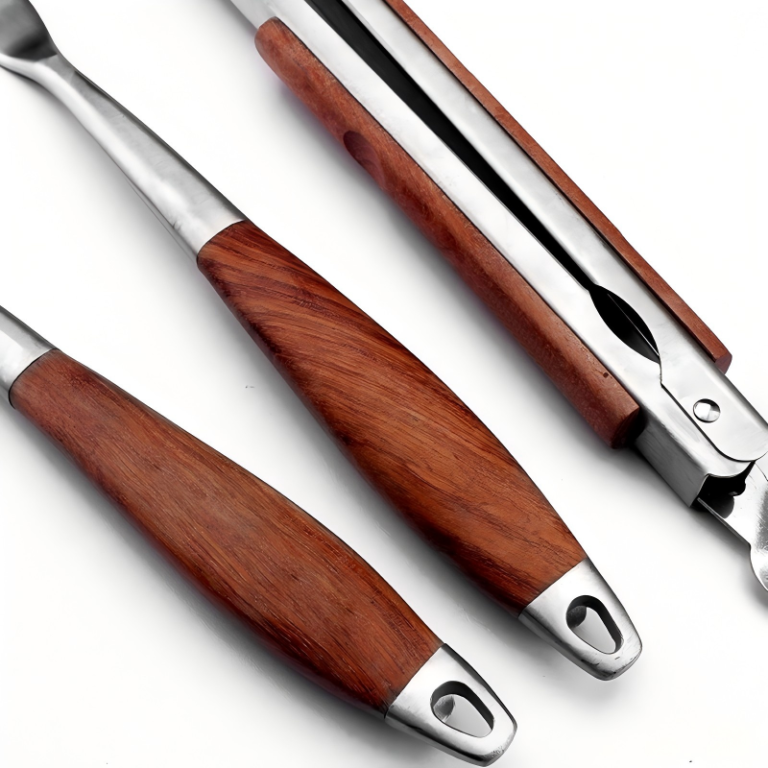
Wood is the part people ruin first. It is porous, so it absorbs water, swells, and then shrinks as it dries — which loosens the rivets and opens cracks where bacteria collect. A wooden handle should be wiped, not soaked, and never left standing in a sink or put in a dishwasher.
If the wood starts looking dry and pale, rub in a little food-safe mineral oil or a board butter, let it sit for twenty minutes and buff off the excess. Two or three times a season is enough. Oiling closes the surface again and stops the handle drinking water the next time it is washed.
Silicone and coated parts
Silicone handles and basting brush heads are the easy ones. Most are heat-stable well past grill temperatures and can go on the top rack of a dishwasher. The one thing they dislike is a knife or a sharp edge, which cuts the surface and leaves a flap where food catches.
If a silicone part smells of last week's marinade, soak it in a solution of warm water and bicarbonate of soda for an hour, then wash normally. Silicone absorbs odours when it is stored wet, which is another reason to dry everything first.
What each material tolerates
| Material | Wash | Dry | Store | Avoid |
| Stainless steel | Hot soapy water, soft sponge | Towel, then air | Dry rack or bag | Long salty soaks, steel wool |
| Wood handle | Wipe with a damp cloth | Immediately, upright | Dry, ventilated | Soaking, dishwasher, direct flame |
| Silicone | Hot soapy water or dishwasher | Towel or air | Dry, loosely packed | Sharp edges, storing wet |
| Coated or painted metal | Soft sponge only | Towel, then air | Separate from metal | Abrasive pads, stacking metal on metal |
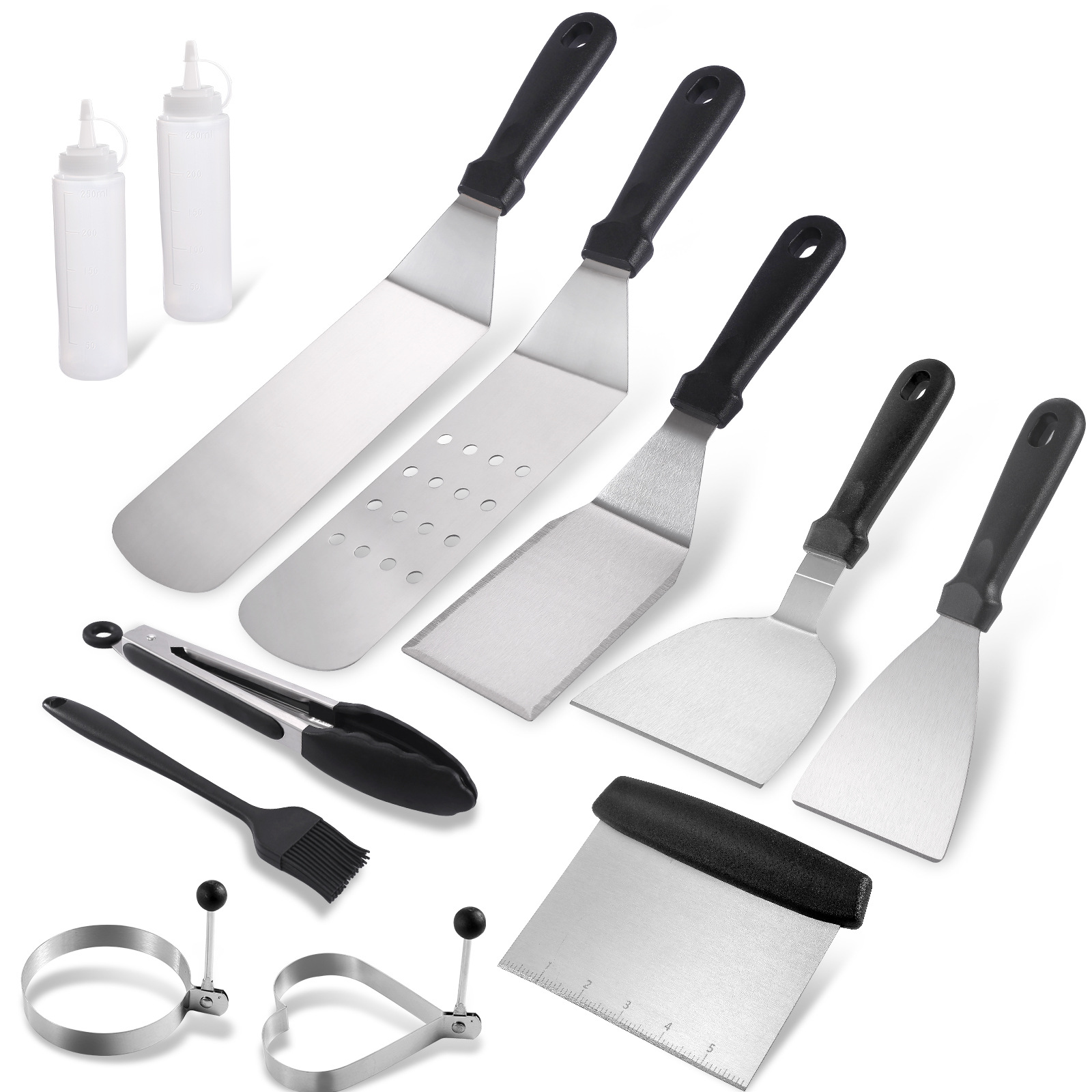
The seasonal deep clean
Twice a year — at the start of the season and again when it ends — take the whole set apart as far as it goes. Work on the hinge and the slot of the tongs with an old toothbrush and hot soapy water; that is where grease accumulates and never leaves with a normal wash.
Inspect as you go. A spatula edge can be re-squared with a file. Loose rivets should be tightened or the tool retired, because a rivet that lets water in will eventually let the handle come off mid-flip. Damaged silicone sleeves and split wooden handles should be replaced rather than glued back together around food.
If the tools have picked up a strong smell from a fish or a heavily spiced marinade, a soak in warm water with a splash of white vinegar for fifteen minutes neutralises it, followed by a normal wash and a full dry.
Storage that protects the edges
Hanging is the best option if you have the wall space: air moves around the tools and nothing presses on the blade edges. If you use a bag, choose one with separate slots or a rigid insert, and pack the spatula and knife with the edge facing away from the other tools.
Never close a wet tool into a bag. Trapped moisture and warmth is the ideal environment for the mould that turns a wooden handle black. If a bag has to travel, let the tools air-dry in the open bag overnight before zipping it shut.
Frequently Asked Questions
Can BBQ tools go in the dishwasher?
Stainless steel and solid silicone parts usually can, on a normal cycle. Wood handles, glued joints and painted decoration cannot — the heat and detergent strip the finish and the drying cycle cracks the wood.
How do I remove rust from stainless tongs?
Most brown marks are surface contamination rather than structural rust. A paste of baking soda and water, rubbed along the grain with a cloth, removes them. If the metal is pitted, the tool has been left in salty water too long.
Is it safe to clean tools with the grill brush?
No. A wire grill brush is for the grate. Using it on your tools scratches the finish and can leave wire bristles behind, which are a genuine hazard when they end up in food.
How often should wooden handles be oiled?
Every ten to fifteen washes, or whenever the wood looks pale and dry. A thin coat of food-safe mineral oil, left twenty minutes and buffed, is enough — more oil than that just sits on the surface.
Bottom line
Clean while warm, dry completely, and oil the wood and the hinge a few times a season. That is the whole method. Tools treated this way outlast the grill they came with, and you avoid the rusty tongs and split handles that end up in the bin every autumn.
Our seven-piece tool set with carry bag, the 15-piece grill tool set and the four-piece set with wood handles are all built around stainless heads and replaceable handles. If your tongs are the part giving trouble, the guide on cleaning BBQ tongs goes into the hinge in more detail.
Silicone and lined gloves are part of the same set, and they take the same treatment — see how to choose BBQ gloves for high heat so they survive the wash as well as the tools do.