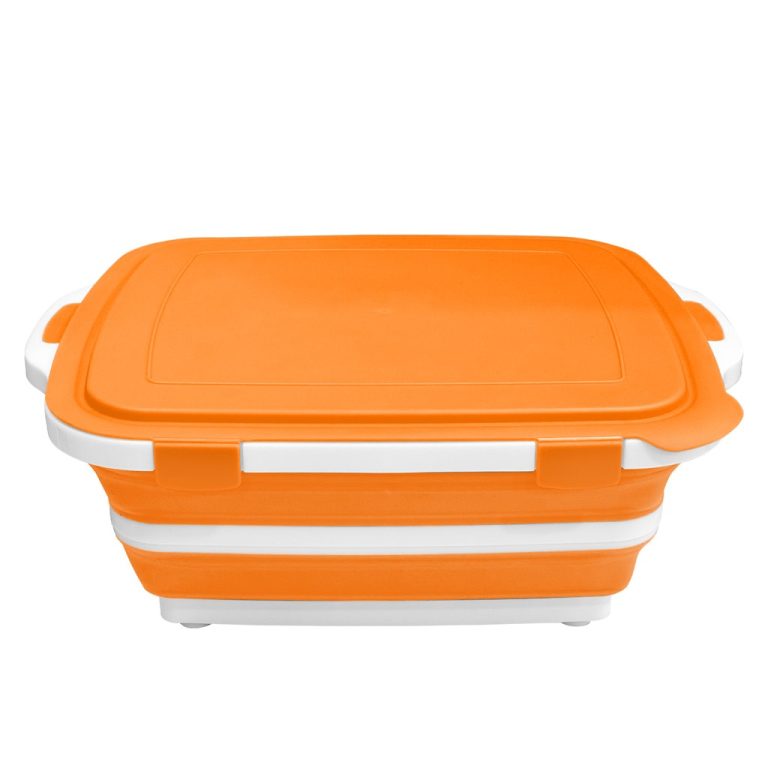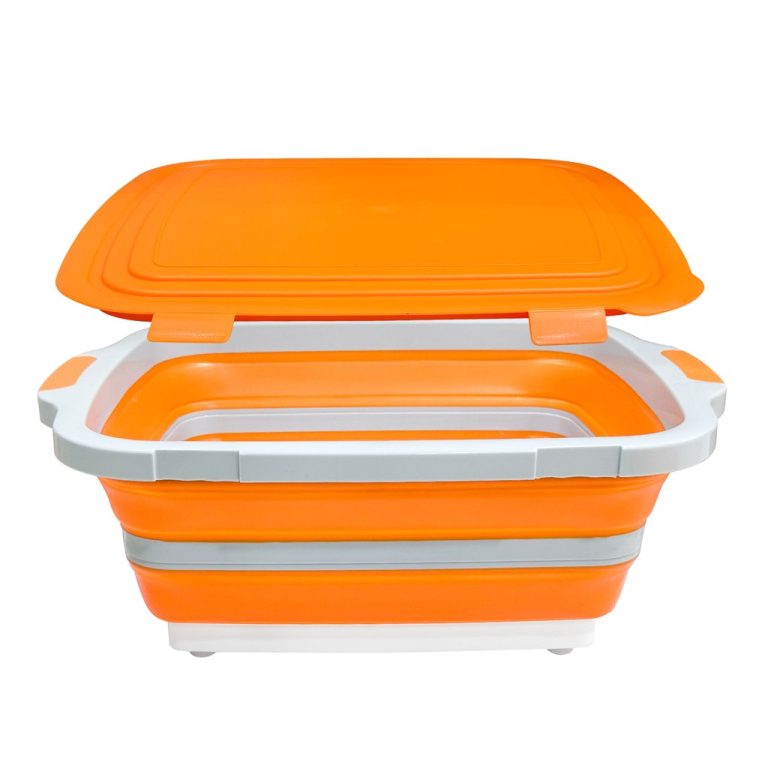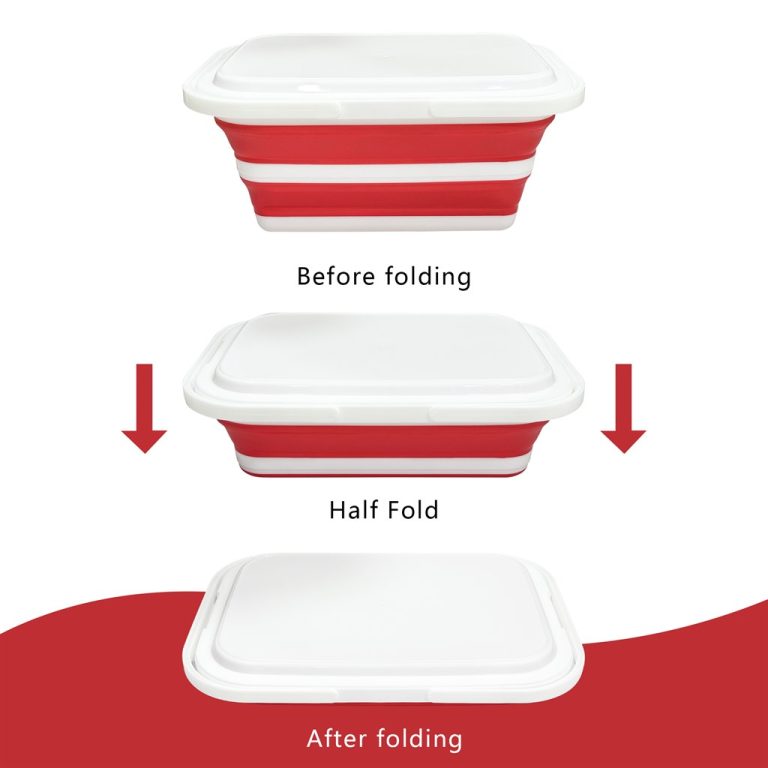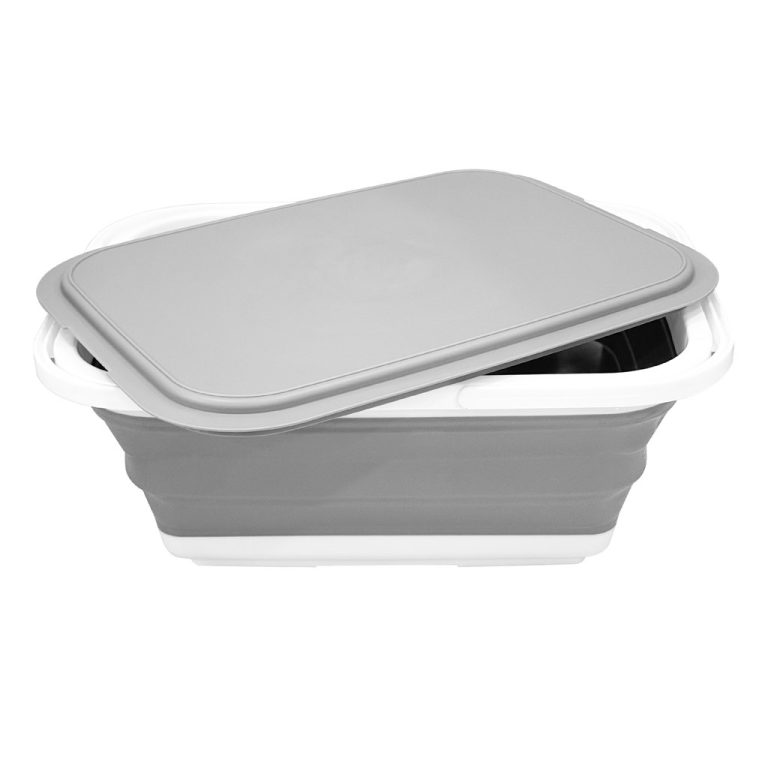
A collapsible colander and a folding strainer get used as if they were the same word, and in a shop they usually are. In a kitchen they are not. A colander is a bowl with holes in it, designed to hold a full load of food while water leaves. A strainer is a screen you pour through. Most folding versions on the market sit somewhere between the two, and that is exactly why some of them work well and others are a nuisance.
Key takeaways
- Hole size decides what you can drain. Rice and small pasta need 1.5 mm or less; potatoes and greens want 4 mm and drain twice as fast.
- Wall height matters more than diameter. A shallow wide colander spills; a deep one holds a full load without you standing over it.
- A flat folding strainer is for pouring, not for soaking. If it has no wall, food sits in the water that cannot reach the holes.
- The base and the handles decide whether it stays put. A colander that tips when you pour is the one that ends up in the cupboard.
Why the difference is worth knowing
Every folding colander has to make a choice: fold flat and lose the wall, or keep the wall and take up more space. Once you see the trade, the product makes sense.
A collapsible colander keeps a wall of some kind, usually 5 to 8 cm, so it can sit in the sink and hold two kilos of potatoes while the water runs away. A folding strainer flattens almost completely and is meant to be held or laid over a bowl while you pour. Neither is better; they answer different questions.
The mistake is buying the flat one to replace the deep one. People do this because it packs smaller, then discover that a shallow tray full of pasta water has nowhere to drain to, and the pasta sits in it.
What controls drainage in a collapsible colander
Four measurements decide how fast water leaves and how much food comes out with it.
| Hole diameter | 1.5 mm keeps rice and orzo in; 4 mm drains greens quickly; 6 mm and above is for potatoes and for rinsing, not for grains |
| Hole density | More holes across the base drains faster and clogs less than a few large ones at the centre |
| Wall height | Below 5 cm a colander is really a strainer; above 10 cm it holds a full family portion without topping out |
| Base and feet | Flat base with silicone feet sits in a sink without tipping. Round-bottomed models roll |
One detail that is easy to miss: the holes should also be present on the lower wall, not just the base. Water leaves through the side when the base is covered by food, which is the normal state of a full colander. If you want the size argument, our guide to 8, 16 and 30 litre basin sizes covers what each volume really holds.
Where a folding version wins
Storage is the obvious answer and it is a real one. A colander that folds to 3 cm fits in a drawer that a rigid one will not enter, and in a camper or a boat that is the difference between owning one and not.
The second advantage is less obvious: a folding colander can double as a serving bowl when it is closed, because a flat base with a rim holds a salad as well as it drains one. That is why the combination models are popular with campers — one piece doing the work of two in a box that has no room for either.
If your draining job is mainly pasta and vegetables at home, and there is a cupboard for a rigid colander, buy the rigid one; it is cheaper and lasts longer. The folding version earns its place when space is the binding constraint.
Pairing it with a board or a bowl
The folding colander is at its best when it is part of a set rather than on its own. A board with an integrated colander gives you a single surface that cuts and drains, which is the reason that format outsells the standalone version in camping ranges: nothing has to be carried from the counter to the sink.
Breading is the other natural pair. A sieve-topped bowl shakes off excess flour and drains oil afterwards, and a bowl with a sieve insert is easier to wash than a flat tray with flour stuck to it. Both are covered in more detail in our piece on the folding cutting board with a colander.
For shops, garden centres and brands
Nicebuy produces folding colanders, strainers, sieve-topped bowls and boards with integrated colanders as standard production lines, with MOQ 300 pieces per model, samples in 3 to 5 working days and the sample fee credited against the first production order. Diameter, hole size and pattern, wall height, handle type, colour and sleeve printing are all customisable, and every model is made from food-contact grade materials.
For a camping or barbecue programme the three pieces that sell together are the folding colander, the board with a colander, and the three-in-one prep basin, because they cover draining, cutting and washing from one packing carton.
Frequently Asked Questions
Can a folding colander replace a regular one?
For everyday draining, yes, if the wall is 5 cm or more and the holes are 2 to 4 mm. For rinsing rice or draining orzo, no: the holes are usually too large and the grains go with the water.
Do collapsible colanders go in the dishwasher?
Silicone and polypropylene ones do, on the top rack. Open them out first, or the fold traps food and water. Leave them open to dry, closed while damp they keep a smell.
Why does my strainer drain so slowly?
Almost always because the food has covered the base and there are no holes in the lower wall. A model with side holes drains through the sides while the base is blocked.
Is a silicone folding colander better than a plastic one?
Silicone stays flexible in cold water and grips a wet sink better. Plastic folds more rigidly and holds its shape under a heavy load. Silicone with a polypropylene rim is the usual compromise.
Bottom line
Choose a collapsible colander on hole size first, then wall height, then the fold. The foldable board with a colander covers cutting and draining on one surface, the three-in-one folding prep basin takes washing, draining and soaking, and the collapsible shaker bowl with its sieve is the one to reach for when the job is coating rather than draining. A colander that packs flat and holds nothing has moved the problem rather than solved it.