Most folding cutting boards are bought for one of three reasons. The kitchen drawer is too shallow for a full-size board, the camping box has to close flat, or there is a barbecue to run and no second surface to put anything on. All three come down to the same test: does the board still behave like a board once it is open?
Key takeaways
- Rigidity when open is the whole product. If the two halves flex against each other under a knife, the fold has cost you the board.
- Boards with a raised wall and a drain are for wet work; flat folding boards are for slicing. They are not the same tool.
- The hinge line is where a folding board fails, in cleaning as much as in strength. If you cannot get a cloth into it, food stays there.
- Thickness beats size. A 5 mm board will survive a season of outdoor use; a 2 mm one will bow and then rock.
Why folding rather than flat
A flat board is stronger, cheaper and easier to clean. Nobody argues about that. The reason folding versions exist is storage, and storage is not a small problem for the people who buy them.
A standard 40 by 30 cm board does not fit in a typical apartment drawer, will not go in a camping crate, and cannot be carried in one hand along with a tray of meat. A board that folds in half and then in half again solves all three, and for a camper or a boat owner it is often the difference between having a board and not having one.
The trade is real, though. Every fold is a place where the surface can move, where liquid can sit, and where a thin section can crack. So the question is not whether folding boards are good; it is which design has paid for the fold somewhere other than the working face.
What to check on a folding cutting board
Five things separate a board that lasts from one that goes soft in a season.
| Hinge | A full-length piano hinge or a moulded living hinge. Two or three small metal pins in plastic will loosen first |
| Thickness | 5 mm minimum for food prep, 8 mm if the board doubles as a serving surface |
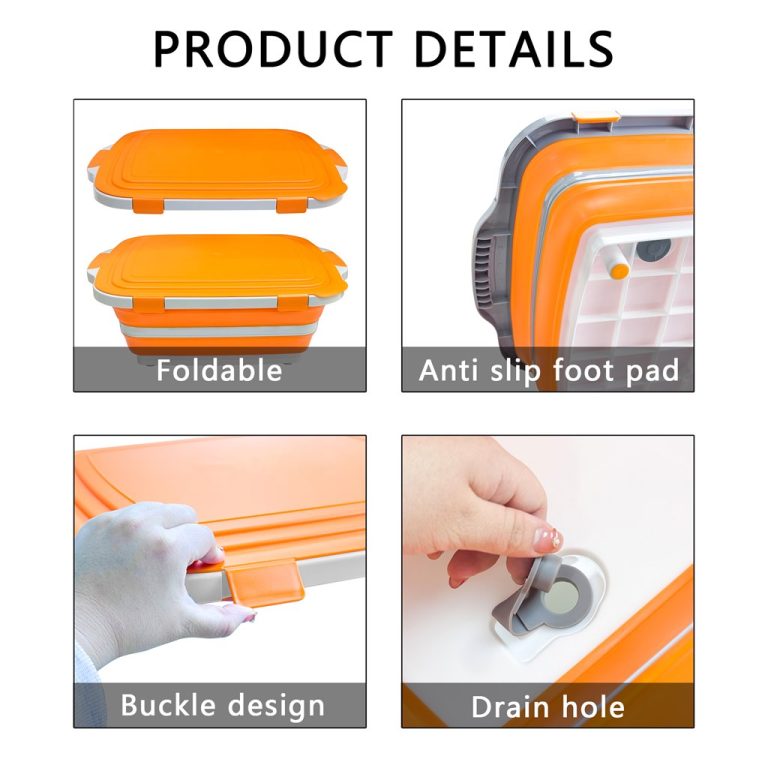
| Wall and drain | Needed for washing vegetables, draining a rinsed chicken or catching juice. Flat boards have neither |
| Stopper or foot | Silicone feet or a moulded lip. A board that slides on a wet table is the reason people stop using it |
| Cleaning access | The hinge gap should be wide enough for a brush or fully closed and flush. Anything in between collects food |
The same test applies whether the board is for a home kitchen or a catering van. If you want the size argument instead, our guide to 8, 16 and 30 litre basin sizes covers how much volume each one actually holds, which matters when the board and the tub travel together.
Camping, barbecue and the small kitchen
The three buyers want different things from the same product.
Camping. Weight and packing volume decide it. A folding board that lies flat against the side of a crate is worth more than a thicker board that has to go on top. A model with a side wall and a drain doubles as a wash-up surface, which is often the missing piece in a camp kitchen.
Barbecue. Here the board is doing raw and cooked work in sequence, which means it has to be cleanable between the two. A board with a fold-down side and a juice channel handles a rested brisket without flooding the table.
Small kitchens. The board spends most of its life in a drawer, so closed thickness is the specification that matters. Anything under 4 cm folded will fit where a flat board will not.
It is worth being clear about the mismatch people buy by accident: a flat folding board is not a replacement for a board with an integrated colander. If the job is draining pasta or rinsing vegetables, you want the drain, not the fold.
Cleaning, knives and the hinge
Wooden boards are not dishwasher safe at any thickness; plastic boards are, and folding boards are almost always plastic for that reason. Polypropylene tolerates hot water and detergent without warping, which is the practical argument for it in a commercial kitchen.
Two habits keep a folding board alive. Open it fully to dry, because a board closed while damp grows a smell along the fold within weeks. And treat the hinge as the weak point it is: the blade should never run across it, so the hinge belongs at the edge of the board, not through the middle of the cutting area.
The knife question follows from that. A folding board is usually paired with a small knife set rather than with kitchen knives, because the people who buy folding boards are working out of a box, a bag or a van. If your knives live in a drawer at home, a flat board will serve you better and last longer.
For shops, garden centres and brands
Nicebuy produces folding cutting boards and folding boards with an integrated colander or a knife set as standard production lines, with MOQ 300 pieces per model, samples in 3 to 5 working days and the sample fee credited against the first production order. Board colour, knife set contents, sleeve printing and export carton are all customisable, and every model is made from food-contact grade materials.
The two models ordered most often as a set with a basin are the folding board with a seven-piece knife set and the foldable board with a colander and drain, because they cover slicing and washing in one pack and ship in the same carton as a 16 litre prep tub.
Frequently Asked Questions
Are folding cutting boards as strong as flat ones?
Not quite, and anyone who says otherwise is selling something. A well-made 5 mm board with a full-length hinge is strong enough for normal kitchen work; a thin board with three hinge pins will flex under a heavy knife within a season.
Can a folding cutting board go in the dishwasher?
Polypropylene ones can, on the top rack. Open them before loading and leave them open to dry. Wooden folding boards should be hand washed and dried flat, or they will split along the seam.
Is a board with a drain worth the extra cost?
If you wash vegetables, rinse meat or cut fruit that releases juice, yes. If you only slice bread and cheese, the drain is extra places to clean with no benefit.
What size folding board should a camper buy?
Measure the inside of the crate first. A board that fits flat against one side is more useful than a larger board carried loose, and most campers end up with something around 38 by 26 cm.
Bottom line
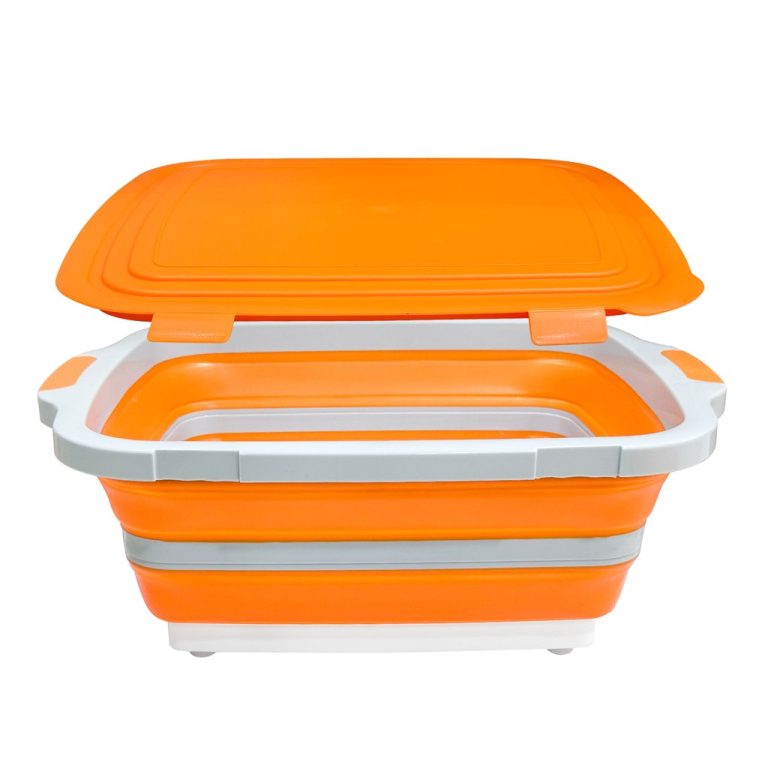
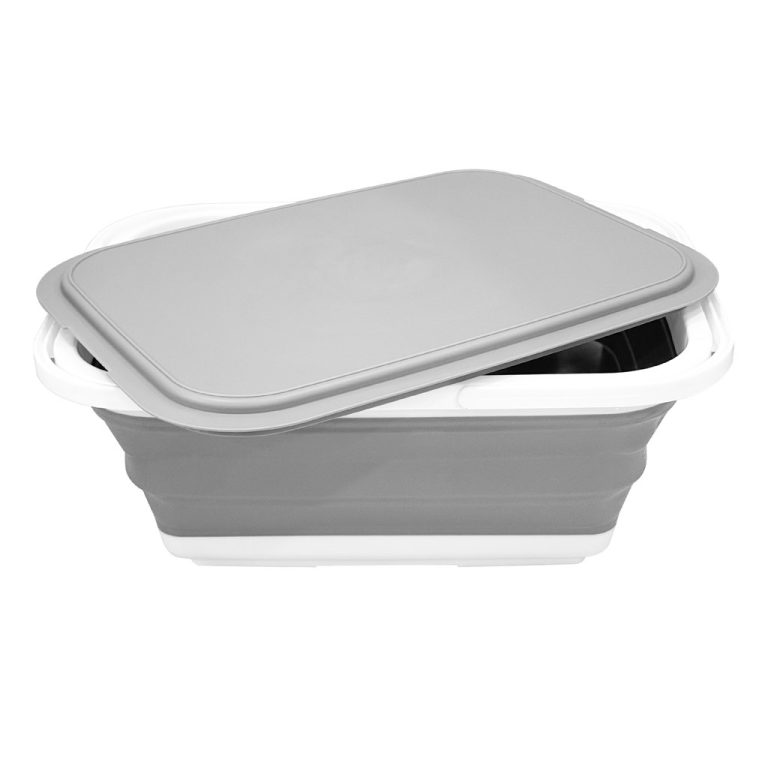
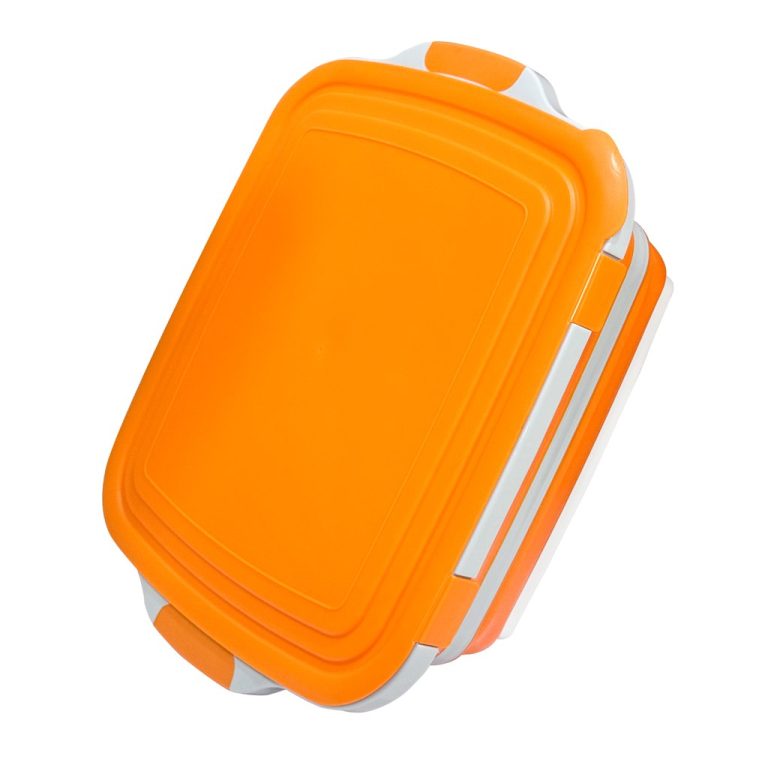
Choose a folding cutting board on the hinge and the thickness, then decide about the drain. The folding board with a seven-piece knife set is the version for anyone working out of a box or a van, the foldable board with a colander is the one that covers draining as well as slicing, and the foldable water basket with its cutting board and flip-over lid takes the same idea up to barbecue scale. A board that folds and then flexes has solved the storage problem and created a worse one.