A meat injector and a brine both get liquid into meat, but they work in opposite directions. A brine pulls salt and water in slowly through the surface, which takes hours. A meat injector pushes marinade straight into the centre in minutes. Which one you reach for depends on how much time you have, how thick the cut is, and whether you want seasoning all the way through or only near the surface. Put simply, meat injector vs brining is a question of speed measured against texture.
Key takeaways
- Brining seasons through the surface and holds water; it needs one hour to overnight.
- Injecting delivers flavour and moisture to the centre of a thick cut in about ten minutes.
- Salt is the active ingredient in both methods, so count the total rather than the marinade alone.
- Whole birds, pork shoulder, brisket and thick loins gain the most from an injector.
How brining works
A wet brine is a salt solution, usually 5 to 8 percent salt by weight, sometimes with sugar. Salt moves into the meat along its concentration gradient and, over time, partly breaks down the protein structure so the muscle holds more water. That is why a brined pork loin stays juicy even when it is cooked slightly past the point where an untreated one would dry out.
Time is the whole cost. Salt needs to travel from the surface to the centre, and the distance grows quickly with thickness. A thin cutlet is done in half an hour. A whole chicken wants four to twelve hours in the fridge. A large pork shoulder needs a full night, and even then only the outer few centimetres are strongly seasoned.
A dry brine — salt rubbed on the surface and left uncovered — does a similar job with less mess. It seasons the surface more intensely but does not add water, because there is no water to add.
How injecting works
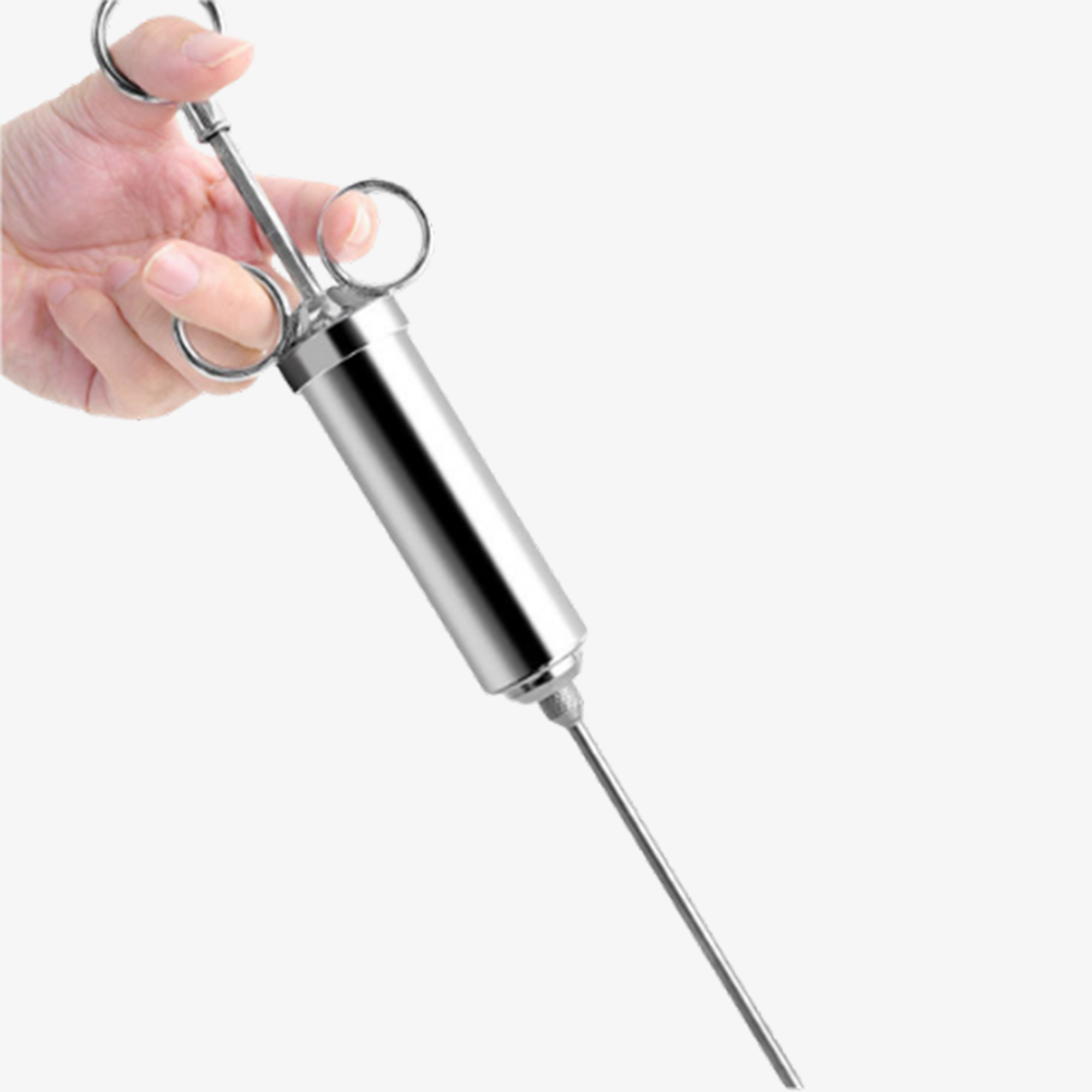
An injector is a syringe with a wide-bore needle and side holes near the tip. You draw up marinade and push the needle into the meat, depositing the liquid in a line as you withdraw it. Because the marinade goes directly into the muscle, there is no distance for it to travel and no waiting.
In practice, injecting a pork shoulder takes about ten minutes. The seasoning lands in the centre of the cut, where brining would need a full day to reach, and it makes a visible difference in the slices rather than only in the crust.
Two design details matter more than anything else. Side holes rather than an open tip stop the needle from clogging with meat. And a stainless needle with a proper plunger seal is easier to clean than a plastic one, which matters because the needle goes deep into raw meat.
Meat injector vs brining, side by side
| Question | Injector | Brine |
| Time needed | 5 to 15 minutes | 1 hour to overnight |
| Depth of seasoning | Deepest, straight into the centre | Surface-first, reaches centre only on thin cuts |
| Water added | Whatever the marinade carries | Significant, especially wet brine |
| Skin and crust | Skin stays dry, so it crisps | Wet brine softens skin unless dried thoroughly |
| Best cuts | Shoulder, brisket, whole birds, thick loin | Whole birds, chops, lean loin, fish |
| Equipment | Syringe, cleaned after every use | Container large enough to submerge the meat |
Flavour and texture, not just moisture
Brining changes texture as well as flavour. The meat becomes noticeably springier and holds more water; some people like that and some find it slightly ham-like, especially if the brine is strong or the soak runs long.
Injecting leaves the natural texture closer to the untreated cut. The muscle is not soaked, so it does not take on that resilient, water-filled feel; what changes is the seasoning inside. That difference is why competition cooks often inject for flavour and leave the texture alone, while a home cook chasing maximum juiciness may prefer the brine.
Which one to choose
Choose an injector when the cut is thick, the clock is short, or you want the seasoning to read in the middle of a slice. Pulled pork, brisket, a whole turkey the day before a holiday, chicken thighs destined for a curry — all of them reward a few minutes with a syringe.
Choose a brine when the cut is thin to medium, when you have time, or when salt itself is the point rather than a specific flavour. Pork chops, a spatchcocked chicken, a lean loin roast and most fish are better brined than injected, because the salt has a short distance to travel and the texture benefit is real.
Doing both
There is no rule against it, and a lot of barbecue does exactly this: a light brine overnight for moisture, then an injection of stock, butter and seasoning an hour before cooking for flavour. The one thing to watch is total salt. If the brine is 6 percent and the injection is salted, the finished meat can taste cured rather than seasoned.
Keep a note of the salt in each step and taste the raw marinade before it goes in. If it tastes aggressively salty on its own, cut it with unsalted stock.
Food safety and needle care
An injector goes into raw meat, so it contacts bacteria directly. Wash it immediately after use in hot soapy water, then push hot water through the needle with the plunger to clear the side holes. A pipe cleaner or the thin brush that comes with most kits handles the inside of the bore. Let every part dry separately before it goes back in the case.
Keep the injector for raw meat and marinade only, and do not use the same needle to pierce cooked meat for serving. Never inject meat that has already been cooked or is about to be served rare on the outside, because the needle carries surface bacteria inward.
Frequently Asked Questions
Is injecting better than brining?
Neither is universally better. Injecting wins on speed and depth for thick cuts; brining wins on water retention and texture for thinner cuts. The right answer depends on the piece of meat in front of you.
Do I have to brine after injecting?
No. Choose one method or reduce the salt if you use both. Combining a full-strength brine with a salted injection is the usual reason injected meat tastes too salty.
What can I inject besides marinade?
Warm stock, melted butter, fruit juice, apple cider vinegar and a little sugar all work. Warm liquids draw up more easily than cold ones, but let the mixture cool below 40 °C before it touches raw meat.
How often should I inject across a large cut?
Roughly every 2 to 3 cm in a grid pattern, pushing to the centre and depositing liquid as you withdraw. Over-injecting in one spot leaves a pocket that leaks out during cooking.
Bottom line
Brining is a slow, gentle exchange through the surface; injecting is a direct delivery to the middle. If you cook thick cuts on a schedule, an injector earns its place in the drawer. If you cook thinner cuts and plan ahead, a brine does the job with nothing more than salt and a container.
Our 304 stainless meat injector kit and the single stainless marinade syringe both use side-hole needles that will not clog. Both sit in the injector range, next to the prep tubs we use for brining overnight.
What the meat is cooked on matters too — the guide to a grill pan for a gas grill covers fit and drainage. And if the shoulder is pulled afterwards, gloves chosen by job make that easier.