Ask two people at a barbecue which tongs are better and you will get two confident answers. Both are usually right, for different reasons. Stainless steel and silicone tongs are built for different jobs, so it helps to know what happens to each one when it gets hot, wet and greasy. Choosing between stainless steel or silicone tongs is really a question about grip, heat and what you cook on.
This comparison covers the five things that actually decide it: grip, heat, non-stick cookware, food safety and how long each pair lasts.
Key takeaways
- Stainless steel grips heavy food better and does not soften near a fire.
- Silicone tips protect non-stick and ceramic coatings.
- A silicone handle stays cool, which matters over a hot grill.
- Neither is "chemical-free" — both are food-contact materials, and both should come with a test report.
First, the names cover three different products
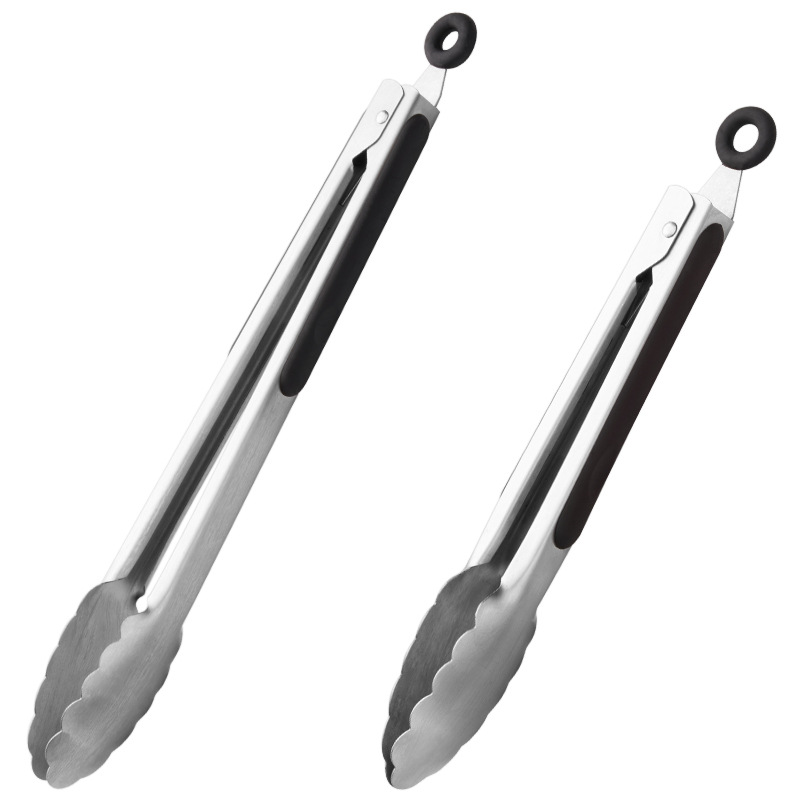
"Silicone tongs" usually means one of three things, and they behave differently. All-silicone tongs are rare because they bend under a heavy roast. Most common is a stainless steel body with silicone tips, which keeps the strength and protects the pan. A third version wraps the whole handle in silicone so it stays cool while the working end is still metal.
That distinction matters when you read shopping descriptions. A pair described as "silicone tongs" may still be 80 percent stainless steel.
Grip: where stainless steel wins
Metal tines with a scalloped or toothed edge bite into food. A chicken leg, a slab of ribs or a wet corn cob comes up without slipping. Bare silicone is smoother, and while textured silicone has improved a lot, it still struggles with anything heavy and oily.
If your tongs are mostly used to move meat, stainless steel is the practical choice. Teeth or a wave-shaped edge make a bigger difference than any material claim on the packaging.
Non-stick pans: where silicone wins
Metal edges scratch coated cookware. Once the coating is scored, food starts sticking in exactly those places, and the pan is on its way out. Silicone tips are soft enough to lift food out of a coated pan without marking it.
The same applies to ceramic-lined griddle plates and to the porcelain coating on some grill grates.
Heat: what each one tolerates
| Material | Comfortable range | Watch out for |
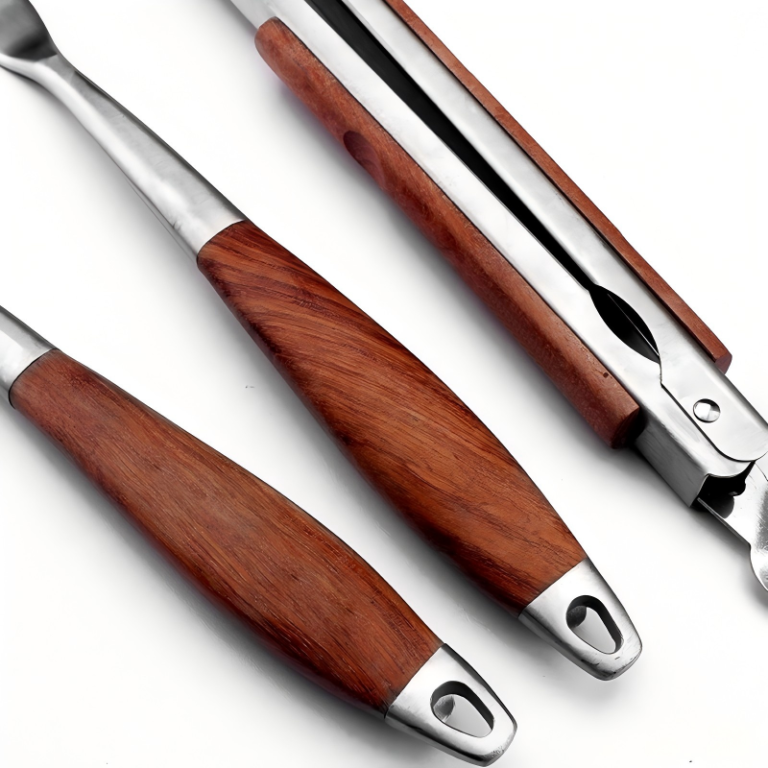
| Stainless steel 304 | Any grill temperature | Handle gets hot; use a silicone or wood grip |
| Silicone tips | Up to about 230 °C | Do not rest the tips directly on a live coal bed |
| Silicone-wrapped handle | Stays cool in normal use | Long contact with a hot grate still heats through |
| TPR grip | Up to about 120 °C | Keep clear of open flame |
Notice that the metal end and the grip are separate questions. A pair can be perfectly grill-safe and still have a handle that gets uncomfortable after ten minutes if it is bare steel.
Food safety: silicone and TPR are not the same
Both materials are used in food-contact kitchenware, and both have to pass migration testing for the market they are sold into. The difference is the grade. Food-grade silicone and food-grade TPR are tested; general-purpose versions of either are not, and those are the ones you find on unbranded cheap tools.
When you are buying, the useful question is not "silicone or metal" but "which report covers this material". A supplier who can name the grade and show the test report is answering a more important question than the label on the front of the packet.
How to choose between stainless steel or silicone tongs
- Cooking over charcoal or gas, mostly meat. Stainless steel with a heat-resistant grip. Teeth if you handle whole cuts.
- Non-stick or ceramic pans indoors. Stainless body with silicone tips.
- Frequent flipping and turning. A lighter pair with a scalloped edge; heavy tongs tire your wrist faster than you expect.
- Dishwasher use. Both survive, but silicone grips collect water in the seam. Check that the grip drains.
Frequently Asked Questions
Are silicone tongs safe for grilling?
Food-grade silicone tips are safe up to roughly 230 °C, which covers normal grilling. Keep them out of direct contact with coals or a live flame, which is hotter than the material is rated for.
Do stainless steel tongs scratch non-stick pans?
Yes. Metal edges will mark a coated surface. Use a pair with silicone tips in coated cookware and keep the steel ones for the grill.
Why do my tongs get so hot to hold?
Because the handle is bare metal and heat travels up it. Look for a silicone, TPR or wood grip, and longer tongs, which put your hand further from the heat.
Which lasts longer?
A 304 stainless steel body lasts for years. Silicone tips are the part that wears, and they usually outlast the seller's warranty rather than the metal.
Bottom line
Choose by surface and by food. Meat over fire wants stainless steel with a proper grip; coated pans want silicone at the business end. Most kitchens end up with one of each, and that is not indecision.
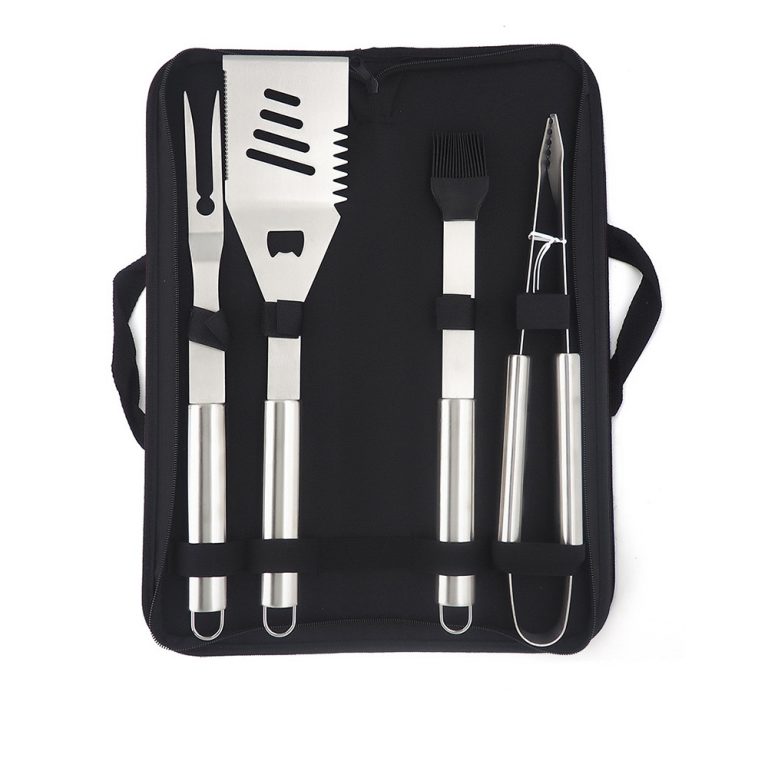
Our foldable stainless steel tongs come in six lengths for grills and smokers, and the three-piece silicone-handle set covers kitchen, steak and grill use. See the full range on the BBQ tongs page.
Whichever you choose, both need the same care: the guide on how to clean BBQ tongs covers the hinge, the drainage holes and the rust that appears along the grip.
Sourcing these for resale? The guide to buying wholesale BBQ accessories covers the spec sheet and packaging points that matter on a container order.