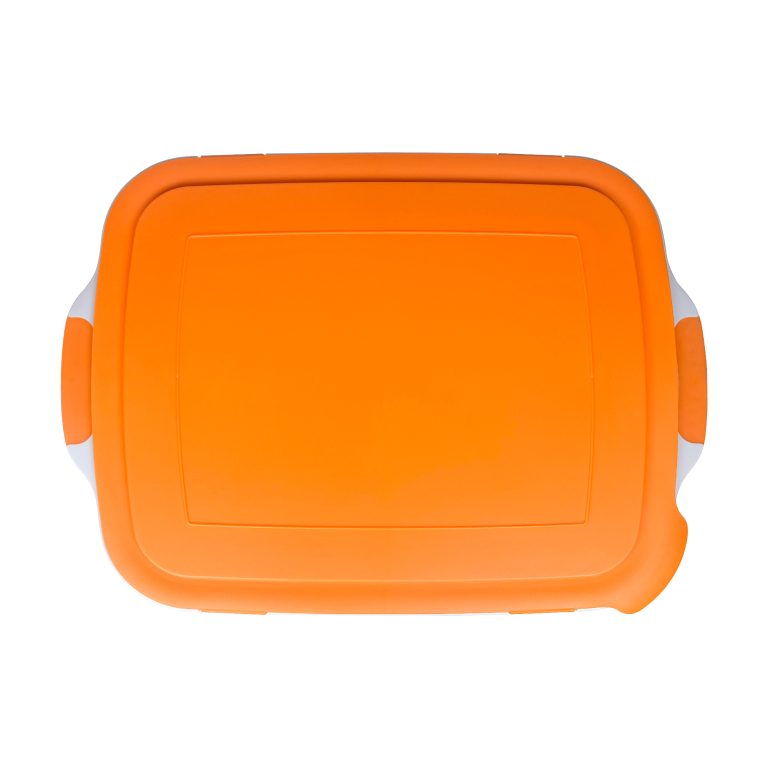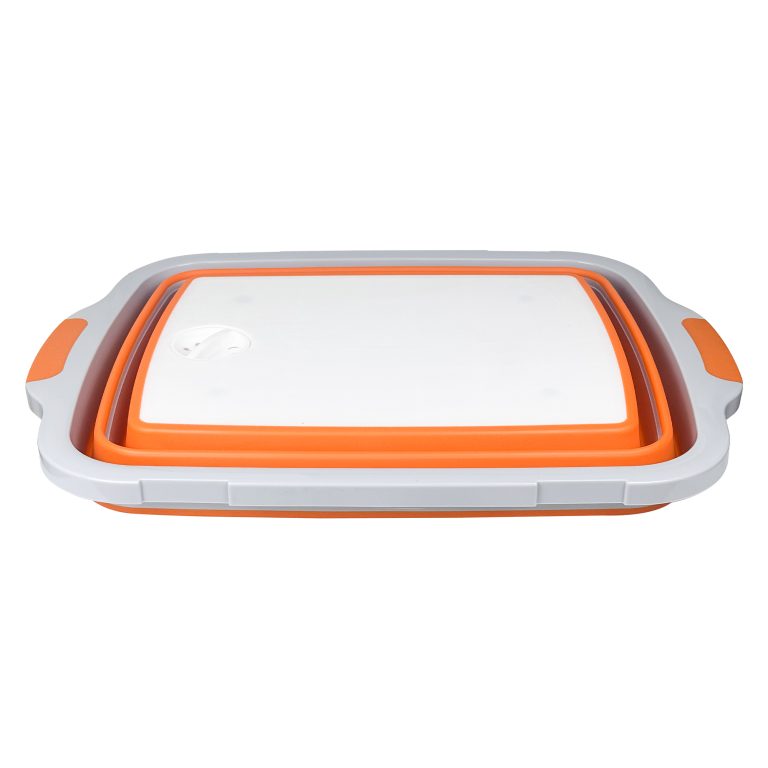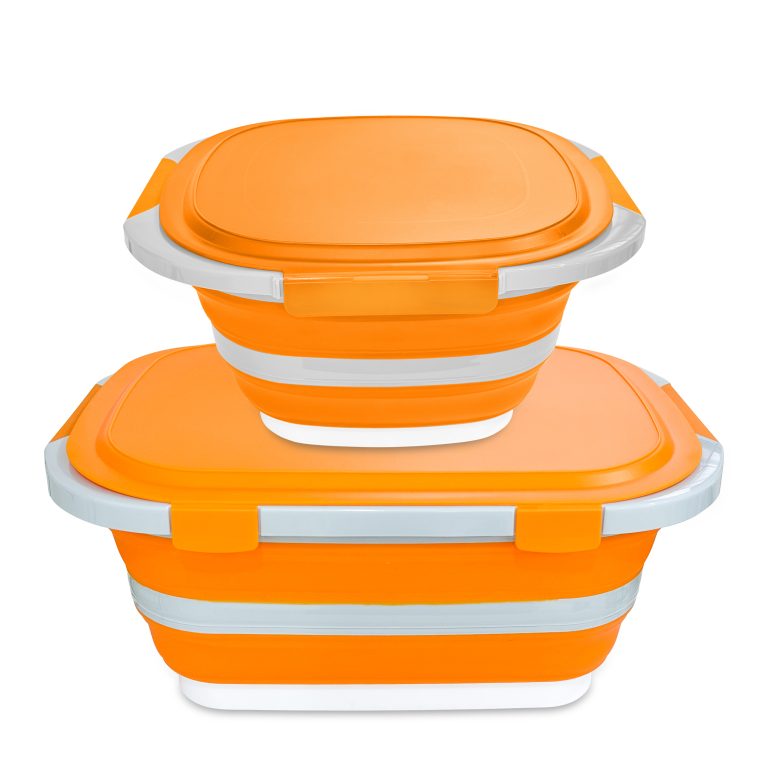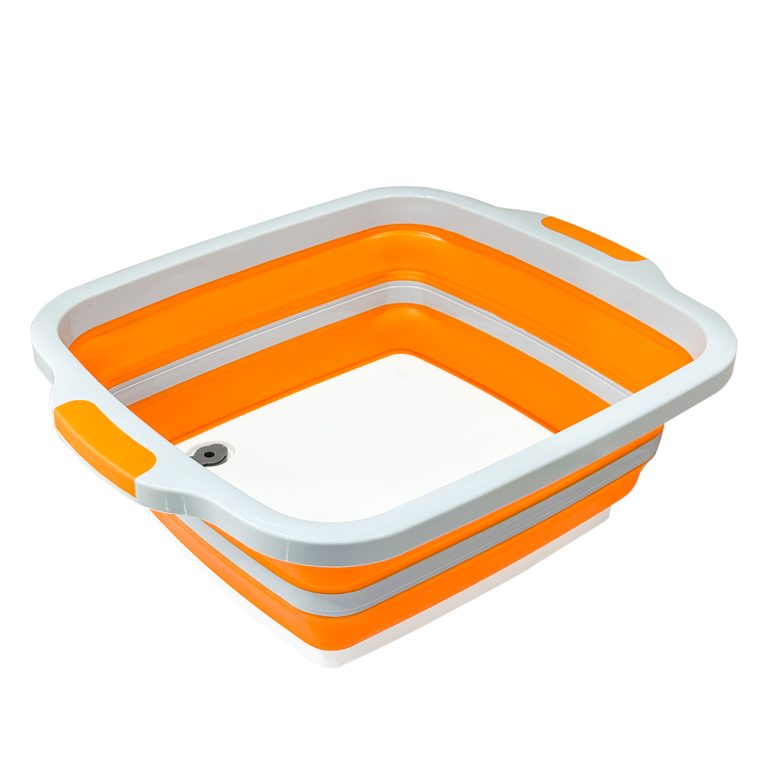
Two basins can look identical in a catalogue photo and be completely different products, because the locking lid decides what they are for. A standard lid is a dust cover. A locking lid is a seal. Buyers who treat them as interchangeable end up with returns from customers who filled a dust cover with marinade.
Here is what each type does, how they map onto real use, and a leak test you can run on any sample in three steps.
Key takeaways
- A standard lid rests on the rim and stops dust, insects and fridge odours.
- A latch lid compresses a gasket and holds liquid during transport.
- Locking lids add parts, assembly time and a higher unit cost.
- Test the seal with the basin half full, not empty. Most failures only show under load.
The difference in one line
A standard lid covers. A locking lid seals. Everything else follows from that.
What a locking lid is for
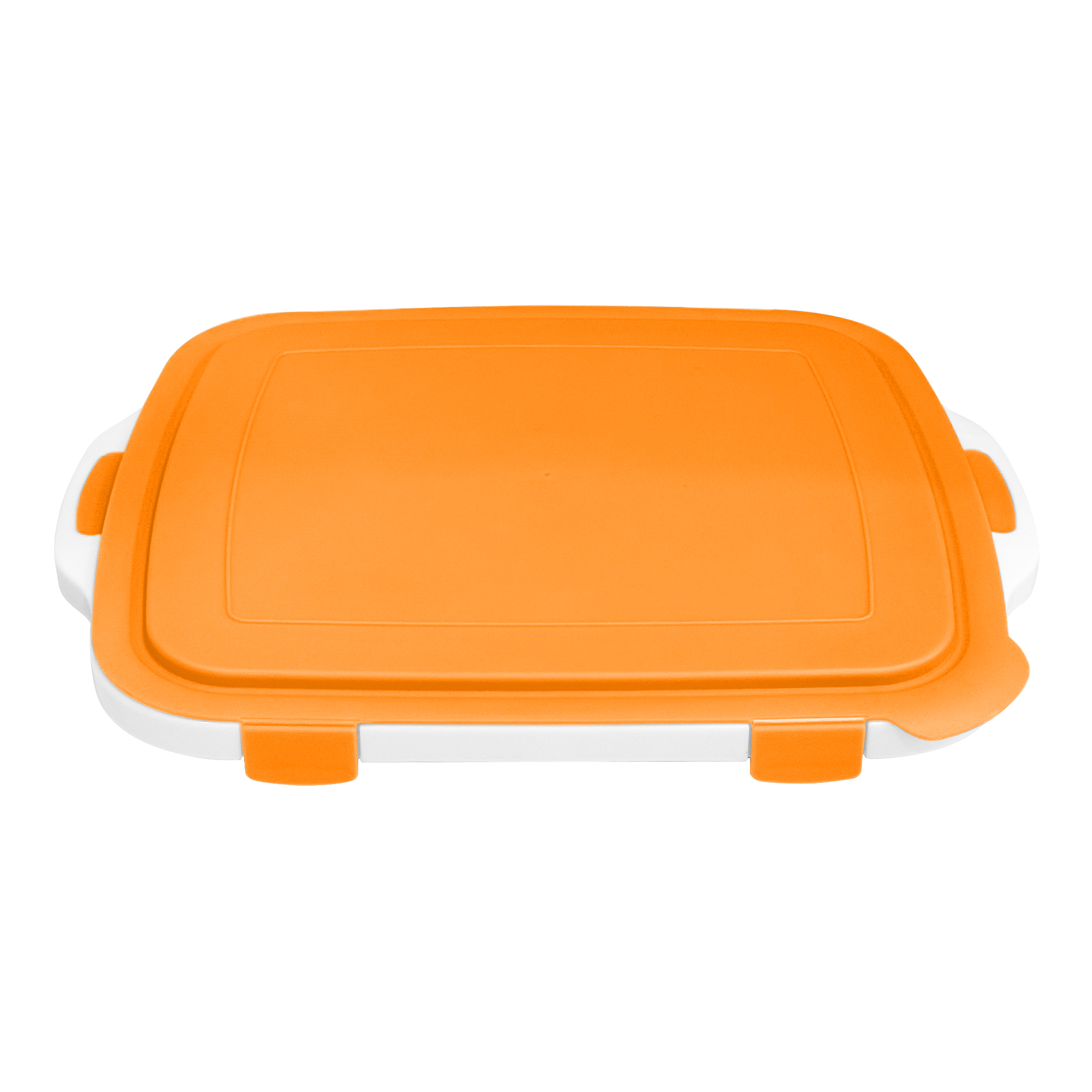
A four-latch lid pulls the cover down evenly against a gasket. That makes it usable for jobs where liquid moves:
- Marinating meat or a whole chicken in the fridge, then carrying the tub to a BBQ without a trail of liquid behind you.
- Transporting a prepared dish to a table, a neighbour or a picnic.
- Storing leftover liquid in the fridge without covering the shelf in cling film.
- Keeping seafood or strong-smelling food contained so other items do not pick up the smell.
A latch lid is also the version that survives a car boot. A standard lid that lifts off at the first corner will not.
What a standard lid is for
The standard lid sits inside or over the rim and does the quiet jobs well:
- Keeping dust off washed produce left on the bench.
- Stopping insects during outdoor use.
- Covering dough while it proves.
- Acting as a light tray or a work surface when inverted.
It costs less, weighs less and has fewer parts to break. For a household that uses the basin for washing and draining, it is often the right answer.
Which one your market will pay for
| Channel | Better fit | Why |
| General kitchenware retail | Standard lid | Lower price point, fewer returns |
| Outdoor and camping | Locking lid | Customers transport food and liquid |
| BBQ and grilling | Locking lid | Marinating and carrying to the grill |
| Meal prep and batch cooking | Locking lid | Fridge storage and stacking |
| Gift and promotional | Standard lid | Keeps the price band achievable |
Selling both is common and usually works better than replacing one with the other. The two versions give a buyer a reason to trade up, and the standard version keeps the entry price competitive.
A three-step leak test
- Fill to the halfway line. Not full. Most seal failures appear at the midpoint, where the wall still flexes.
- Close every latch in a cross pattern. Front left, back right, front right, back left. Closing one side first traps a gap on the opposite corner.
- Tilt 45 degrees and hold for ten seconds. Watch the two corners nearest the lowest point and the join between lid and rim. A single drop in ten seconds is a fail for a sealed product.
Then repeat the tilt after half an hour in a warm room. Gaskets that behave cold often soften and shift when warm.
Frequently Asked Questions
Can a locking lid go in the fridge?
Yes, and that is where it earns its cost. Stack a sealed 16L tub on a shelf and it holds a marinade without leaking onto the shelf below.
Can it hold oil?
Short term, yes. Oil is thinner than water at warm temperatures and creeps past a gasket faster, so treat it as transport, not long-term storage.
Do I need a locking lid on a 30L basin?
Rarely. A full 30L tub is heavy, and a buyer will not carry it far. At that size a standard lid usually makes more sense.
What wears out first on a latch lid?
The gasket, usually from heat rather than from use. Storing the lid latched and the tub in a hot car shortens its life more than opening it does.
Bottom line
Choose the lid by asking what the customer does after washing. If the answer is "puts it away", a standard lid is enough. If the answer is "carries it somewhere with liquid in it", the locking lid is the product, not an accessory.
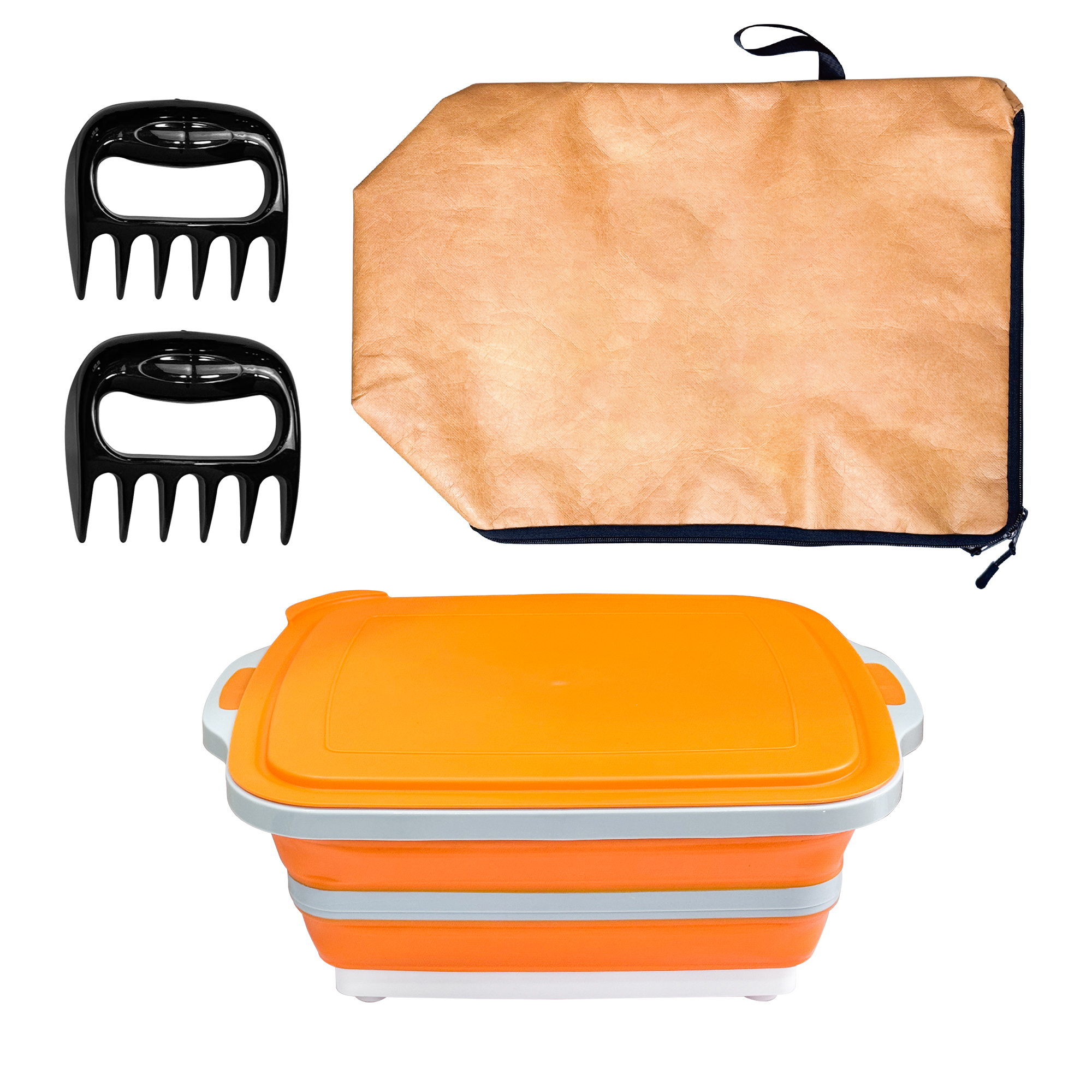
For a first sample of each lid type, an 8L prep tub with a locking lid is the compact option and a 30L prep and serving tub shows the same four-latch seal on a working size.
Both versions are in production. The 20L prep basin with locking lid and the 16L prep tub with airtight locking lid use a four-latch seal, while the 10L prep basin with sealed lid is the lighter option for everyday storage. Ask for both samples and run the tilt test yourself.