One pair of gloves cannot do everything well. The glove that lets you lift a hot grate is too stiff to shred a pork shoulder, and the thin pair that feels good on your hands will not protect you from a 250 °C grill. Finding the best BBQ gloves for pulling pork, lifting hot grates or fitting small hands is quicker by job than by specification.
Key takeaways
- Pulling pork needs grip and heat resistance, not insulation for long holds.
- Moving grates needs thickness and a cuff that stays put.
- Small hands need a closer fit, or the glove rotates when you grip.
- Two pairs cost little more than one and cover everything.
Best BBQ gloves for pulling pork and shredding brisket
This job is about grip on hot, slippery meat. You are not holding anything for long, so insulation matters less than traction. A textured palm works; a smooth one slides off the fat.
Watch the temperature of the meat, not of the grill. A pork shoulder coming out of a smoker at 95 °C is well within what a food-grade silicone glove handles, but the rendered fat makes it slippery. Many cooks use one glove for the meat and a bare hand for the board, which gives better control than two gloved hands.
Meat claws do the same job differently. They are faster on a large piece and keep the meat further from your hand, but you lose the feel for where the connective tissue still holds.
Moving hot grates, trays and baskets
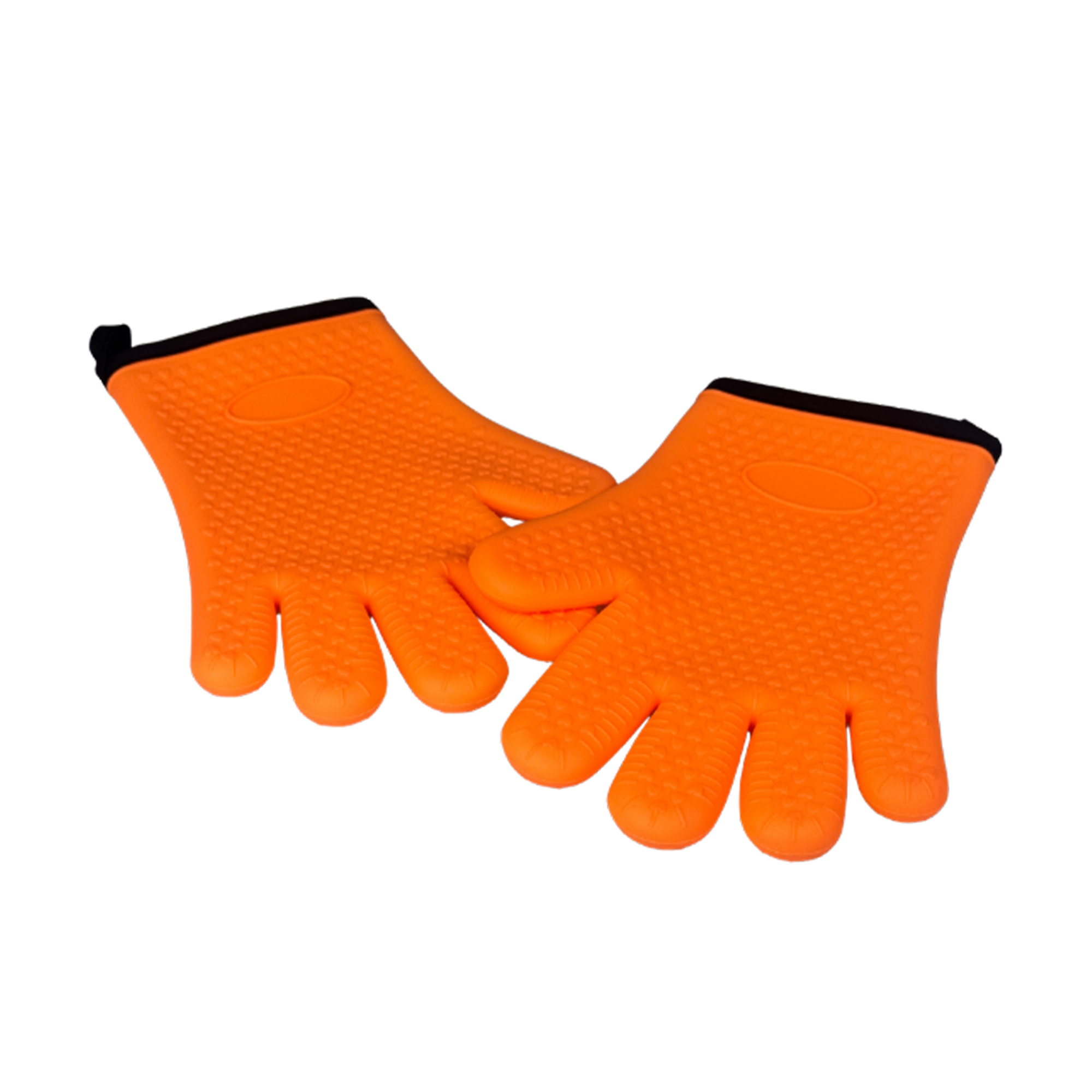
Here you need thickness, a long cuff and a palm that does not slip on metal. Thin gloves are dangerous for this, not because of the temperature but because your grip is weaker than you think when the surface is hot and dry.
A cotton-lined pair adds a few seconds of protection and some cushioning. Keep the action short: lift, move, set down.
Small hands and large hands
Fit is the most overlooked specification. A glove with too much room rotates under load, and a rotating glove on a hot tray is how people get burned. If your hands are small, look for a compact pair rather than a one-size version, and check that the fingertips still reach the ends.
Large hands have the opposite problem: a glove that is too short leaves the wrist exposed.
| Job | Look for |
| Pulling pork | Textured palm, snug fit, moderate thickness |
| Moving hot grates | Cotton lined, long cuff, thick palm |
| Small hands | Compact size, short fingers, snug wrist |
| Frequent flipping | Thin and unlined, with real finger movement |
Two pairs, not one
A thick lined pair for moving hot parts and a thin pair for handling food covers every job at the grill. That is the arrangement most experienced cooks settle on, and it costs less than replacing one compromise pair every season.
Frequently Asked Questions
What gloves do you use for pulling pork?
A food-grade silicone glove with a textured palm is enough. The meat is hot but not hot enough to need a lined glove, and traction matters more than insulation.
Are gloves or meat claws better for shredding?
Claws are faster on a large shoulder and keep your hands further away. Gloves give you more control and are easier to clean afterwards.
My gloves slide off when I lift a tray. Why?
They are too large, or the palm is smooth. A snug cuff and a textured palm fix both problems.
Do I need different gloves for smoking?
A lined pair is more comfortable for long cooks, and some cooks wear thin cotton liners under silicone gloves so they can change the outer pair mid-cook.
Bottom line
Match the glove to the job. Grip for shredding, thickness for hot metal, fit for safety. Two pairs cover the whole cook, and neither one has to be a compromise.
Our anti-slip gloves suit shredding and flipping, the cotton-lined pair handles hot trays, and the compact pair fits smaller hands. All three are on the BBQ gloves page.
If the temperature side is not settled yet, start with best BBQ gloves for high heat. For the meat itself, the comparison of a meat injector vs brining covers how the flavour gets into the shoulder in the first place.