How long a collapsible basin lasts is decided less by how often you use it than by how you store it. A household that folds it properly and keeps it out of the sun gets several years from one basin. A basin left folded in a hot car can stiffen in a single summer.
This is what the cycle rating actually means, the five habits that shorten the life, and the three-step routine that keeps a basin working.
Key takeaways
- Rating is expressed in fold cycles, and normal kitchen use is a few cycles a day.
- Heat, sunlight and folding while frozen do more damage than daily use.
- Rinse, dry, then fold along the creases. Never store it folded while wet.
- Replace when a crease cracks rather than when it looks used.
What the cycle rating means
Our folding walls are tested in the thousands of open-and-close cycles. That number is not a marketing figure: it comes from folding a production sample repeatedly and checking whether the crease shows cracks or takes a permanent set.
Translate it into daily life. One wash, one dry and one fold is three cycles. A busy household doing that once a day reaches roughly a thousand cycles in a year. A basin rated in the thousands is therefore a multi-year product, provided the storage conditions are sensible.
Five habits that shorten the life
- Leaving it in direct sun. UV is the fastest way to age a TPR wall. A windowsill or a balcony rail over a summer does more damage than three years of washing up.
- Folding it while frozen. Cold makes the crease stiff. Let the basin reach room temperature first, even if that takes an hour.
- Storing it folded while wet. Moisture held in a closed crease encourages mould in the fold valley and dulls the surface over time.
- Stacking weight on it. A folded basin at the bottom of a pile with heavy pans on top takes a permanent set along the fold.
- Scrubbing the fold with an abrasive pad. Steel wool and heavy scouring powders cut the surface and create the starting point for a crack.
The three-step routine
- Rinse. Warm water and a drop of washing-up liquid. A soft sponge is enough; the surface does not need abrasion.
- Dry. Open it fully and let it air dry, or wipe along the creases with a cloth. Pay attention to the fold valleys, which hold water longer than the flat panels.
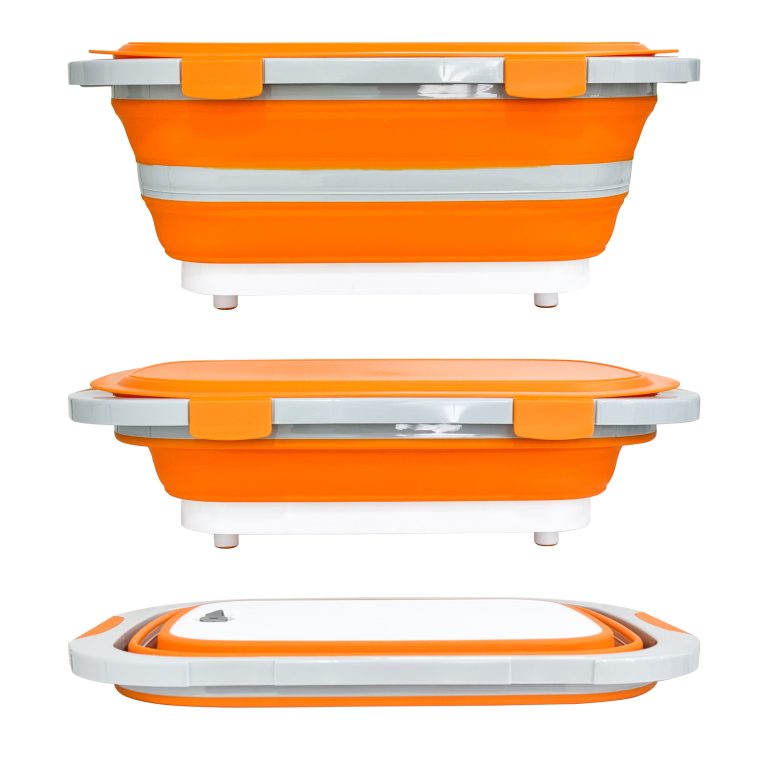
- Fold along the creases. Push the base down with both palms and let the wall collapse on its own lines. Forcing it out of sequence puts a twist into the wall.
Stored flat, in a drawer, or hung from the rim in a cupboard, a basin keeps its shape. If space forces you to store it folded, that is fine, as long as it is dry and not in the sun.
When to replace it
| Sign | What it means | Action |
| Faint white line along a crease | Normal wear | Keep using |
| Dry, chalky band that feels rough | Material losing elasticity | Plan to replace |
| Crack or split along a crease | Structural failure | Stop using it for liquids |
| Plug no longer seals after cleaning | Seat or gasket worn | Replace the plug first |
A basin that has lost its elasticity still works for dry storage, so it is worth keeping one as a spare rather than putting it in the bin.
Frequently Asked Questions
Is a white mark on the fold a sign of damage?
Not usually. A faint line is normal on a folded material. It becomes a concern when the line looks dry, feels rough or starts to crack when you bend it.
Does dishwashing shorten the life?
A cool cycle on the top rack is fine. Repeated hot drying cycles put the same stress on the fold as a hot car, so hand washing extends the life if you use a dishwasher daily.
Should I store it folded or open?
Open is better if you have the space. Folded is acceptable when it is dry and out of direct sunlight.
Can I leave water in it overnight?
Soaking dishes overnight is fine occasionally. Leaving it full for days puts a constant load on the wall and softens the crease, so drain it when you are finished.
Bottom line
Treat the fold as the part that decides the lifespan. Keep it out of the sun, let it warm up before folding, dry it before storing and it will outlast most of the pans next to it. The material tolerates a lot of use; what it does not tolerate is neglect in storage.
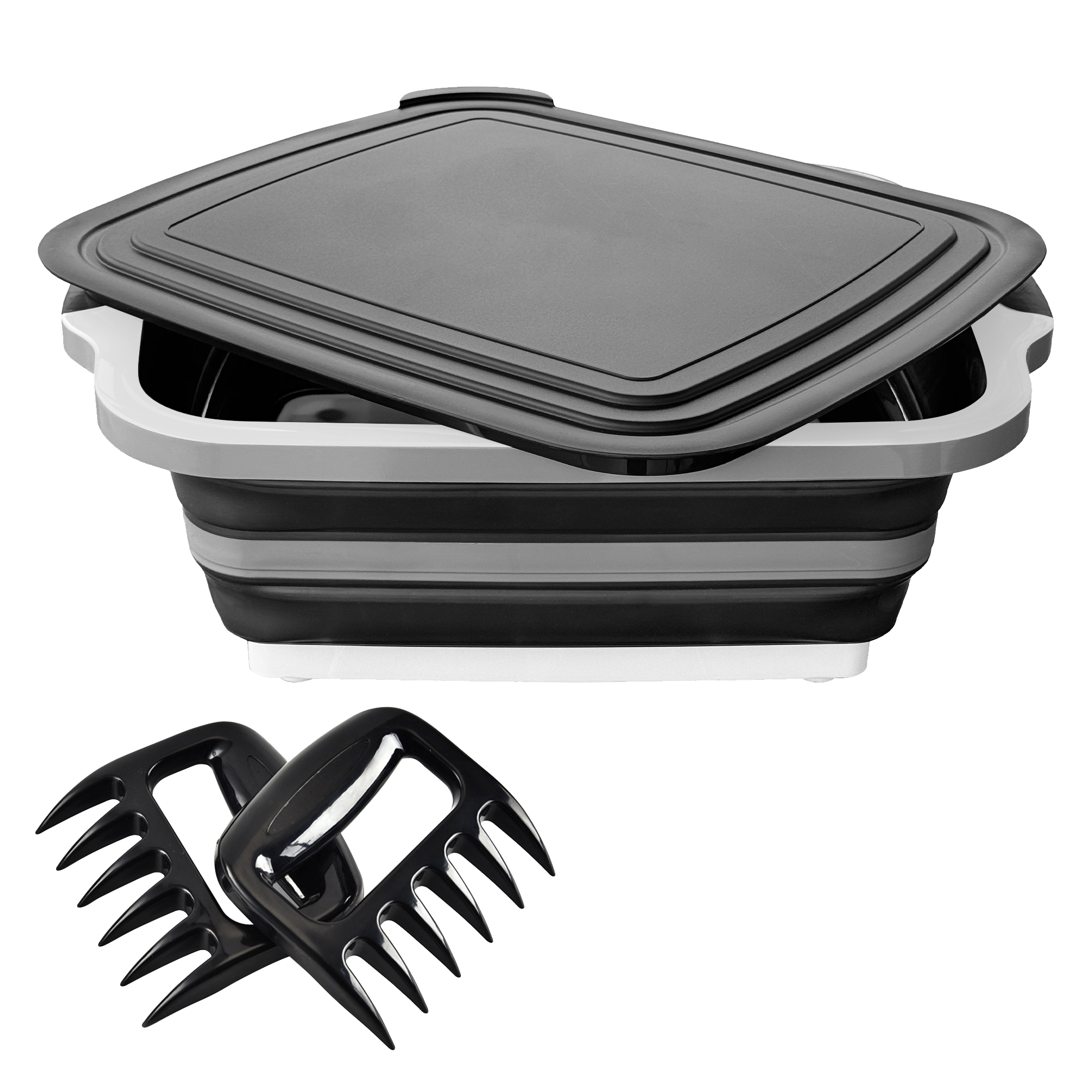
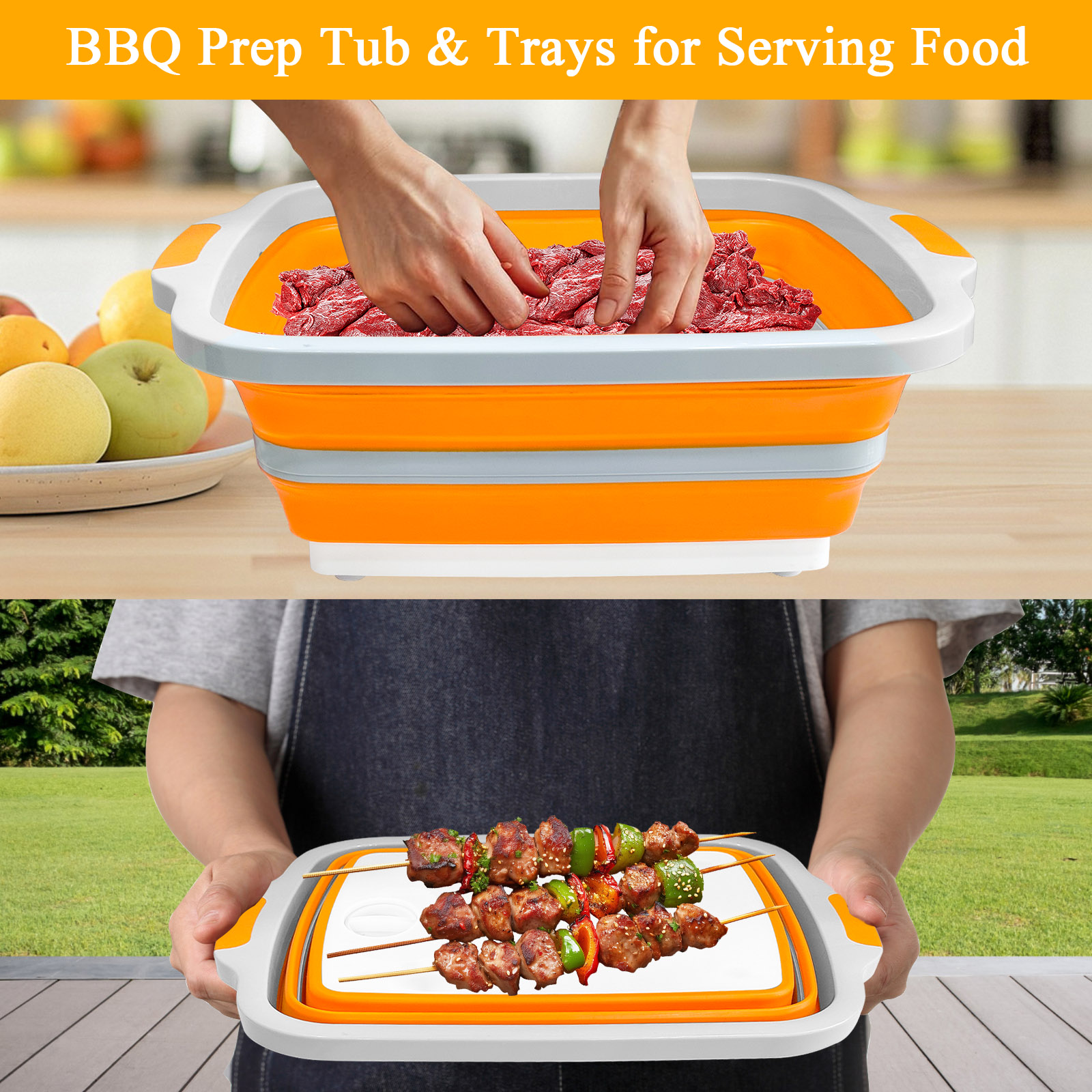
Two models built for that routine: a 3-in-1 prep basin and a 30L collapsible prep tub.
Our basins are rated from -20 °C to 120 °C and built for repeated folding. Two examples are the 30L collapsible prep tub and the 16L collapsible prep box. Read more about how the plant tests them under Factory Strength.