Most grill pans are bought twice: once for the pan, and once for one that actually fits. A grill pan for a gas grill has to clear three constraints that a charcoal grill does not — a fixed grate height, a closing lid, and burners in defined positions. Measuring those three things before you buy saves the second purchase.
Key takeaways
- Measure the grate width, the lid clearance and the handle overhang before choosing a size.
- Holes drain fat and stop food stewing; a solid pan is for sauces and small pieces.
- Thin steel warps on a gas grill because the heat is concentrated under the burner tube.
- Flat pans sit lower than deep ones and are far easier to store.
A grill pan for a gas grill: measure these three things first
- Usable grate width. Not the outside of the grill — the flat area between the side shelves, where the pan can actually sit.
- Lid clearance. With the lid closed, how much height is left above the grate? A deep pan with a handle that stands up will hit the lid.
- Handle overhang. Long handles stick out past the grate and either block the lid or hang over the front, where they get hot and catch on things.
Write those three numbers down and check them against any pan you are considering. It takes two minutes.
Holes or no holes
| Type | Good for | Watch out for |
| Perforated pan or tray | Vegetables, fish, anything that releases fat | Small pieces fall through large holes |
| Drain tray with slots | Meat, grilling with fat run-off | Slots can clog with marinade |
| Solid pan | Sauces, rice, small diced food | Food steams rather than grills |
On a gas grill, a perforated pan is usually the better default. The fat drips onto the flavour bars and burns off instead of pooling around the food.
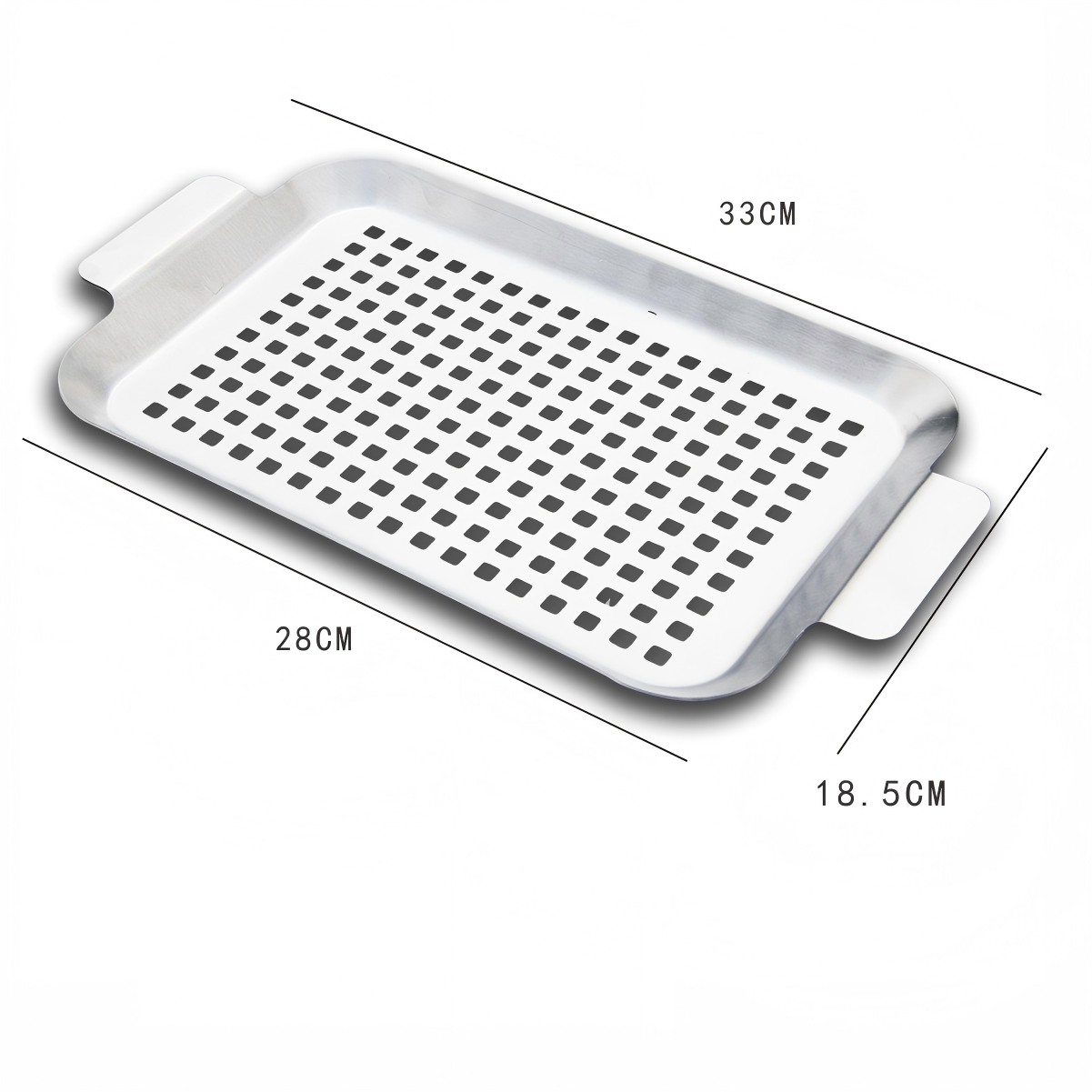
Why thin pans warp
A gas burner puts a narrow band of intense heat under one part of the pan. Thin steel expands there faster than the rest and the pan cups. Look for a pan with a rolled edge and enough thickness to hold its shape, or a removable rack that sits inside a heavier base.
The same thing happens to enamel if the pan is put straight onto a hot burner from cold. Warm it up gradually.
Deep or flat
Deep pans hold more but take up more room in the cupboard and block more of the lid. A flat tray with a low rim covers most jobs and slides into a cupboard standing up or lying down.
If you cook for two, a flat tray in one size is enough. If you regularly cook for six, a deep pan earns its space.
Frequently Asked Questions
Can I use a grill pan on a gas grill with the lid closed?
Usually yes, if the pan is flat or shallow. Check the lid clearance with the handle in place, because a standing handle is what causes most contact.
Do I need a grill pan at all on a gas grill?
For small or delicate food, yes. It stops pieces falling between the bars and gives you a surface for sauces and vegetables that would otherwise slip through.
How do I stop food sticking to a stainless pan?
Preheat the pan for three to four minutes, oil the food lightly rather than flooding the pan, and leave the food alone until it releases by itself.
Is enamel or stainless better on a gas grill?
Enamel heats evenly and cleans easily but chips if knocked. Stainless is tougher and handles higher heat. Both work; enamel suits trays, stainless suits drain pans.
Bottom line
Measure the grate, the lid and the handle overhang first, then choose holes or no holes by what you cook. Those two decisions prevent almost every wasted grill pan purchase.
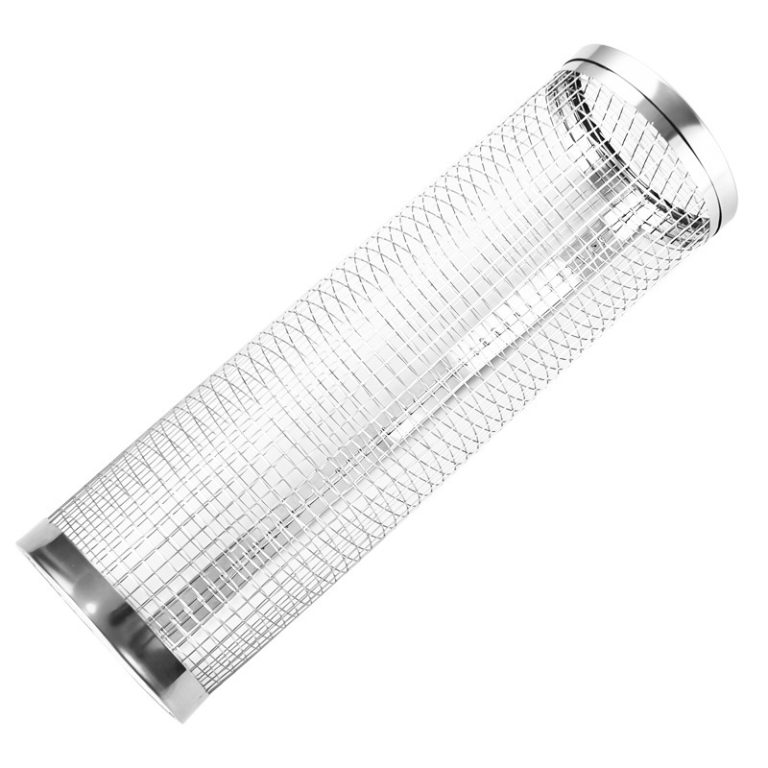
Our stainless drain grill pans come in three sizes, the titanium baking and grill pans cover oven use as well, and the 38 cm oil drain tray handles larger cuts. All of them are on the grill pan page.
If you grill mostly small pieces rather than sauces, a grill basket may suit you better than a pan. When the surface matters more than the drainage, the guide to enamel BBQ trays and pans explains where that coating wins.